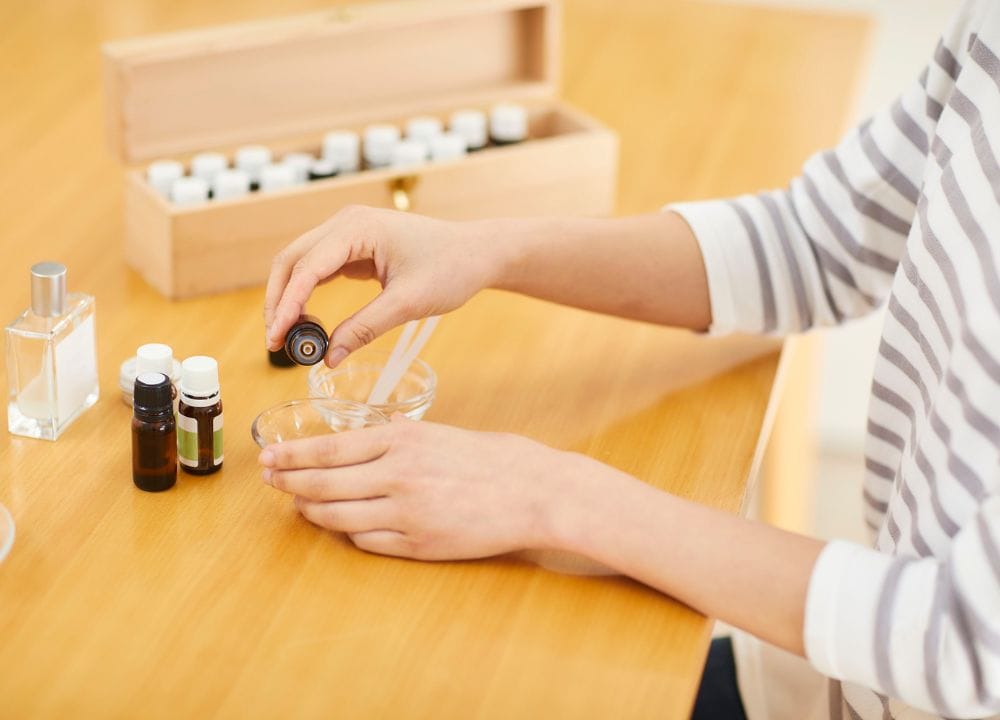
Essential oils are real concentrates of goodness, but their use in diffusion requires precise dosage, precise diffusion rules and a recommended quantity. One drop too many, and lavender’s relaxing effect becomes heady. Too little, and the aromatic ambience remains bland. So how do you perfectly dose your diffuser for an optimal experience?
The number of drops to add depends on several key factors:
✔️ Type of diffuser (ultrasonic, nebulizer, ventilation…).
✔️ Size of room (small bedroom or large living room?).
✔️ Diffusion power and duration of use.
✔️ Essential oils used (some are more powerful than others).
✔️ Public concerned (children, pregnant women, sensitive persons, etc.).
In this detailed guide, we give you all the dosing rules and precautions to take, as well as a complete table of essential oils for diffusers. Better diffusion means better breathing, so let’s learn together how to take full advantage of the benefits of aromatherapy!
🌿 Follow our advice and optimize your diffusion for a healthy, pleasant environment!
This detailed guide will help you answer this question, integrating notions of precious products, ecology and common sense in the use of essential oils.
Why use an essential oil diffuser?
Essential oil diffusers offer a multitude of benefits. They enable you to benefit from the therapeutic virtues of essential oils, such as stress reductionimproving sleep quality sleep with essential oilsrelieving nervous tension and even purifying the air. By diffusing essential oils, you benefit from a healthy, soothing environment, promoting your daily well-being.
Type of essential oil diffuser and method of use
There are several types of diffuser, each with its own specific features (diffuser capacity, reservoir, room dimensions). Knowing these differences can help you choose the right diffuser and determine the number of drops to use according to diffuser size too. A small diffuser will not have the same impact as a large one.
Ultrasonic diffuser
Ultrasonic diffusers use water to disperse essential oils in the form of a fine mist. They are silent and energy-efficient. For these diffusers, add water and the number of drops of essential oil generally varies between 5 and 10 drops.
Nebulizer dispenser
Nebulizing diffusers do not require water. They use compressed air to vaporize essential oils, providing a purer, more concentrated diffusion. For these models, 5 to 12 drops are enough for effective diffusion, depending on the size of the room.
Soft heat diffusers
Soft-heat diffusers gently heat essential oils to release them into the air. They are ideal for small rooms. We recommend using between 3 and 5 drops to benefit from the oils’ properties.
Air diffusers
Ventilation diffusers use a fan. They are portable and practical for travel. In general, 5 to 8 drops ofessential oil are enough for a pleasant diffusion.
Factors influencing the number of drops of essential oil
The number of drops of essential oil to add to a diffuser depends on several factors:
Room size :
For small rooms (10-15 m²), 3 to 5 drops are sufficient. For medium-sized rooms (15-30 m²), use 5 to 8 drops. For large rooms (>30 m²), 8 to 12 drops are ideal. A light diffusion is perfect
Desired fragrance intensity :
Add drops and adjust according to your olfactory preferences and in proportion to your location. Start with a small amount for a light diffusion and gradually increase for a medium or strong diffusion if necessary.
Personal odor sensitivity :
Some people are more sensitive to fragrances than others. It is important to adapt the quantity of essential oil to your personal tolerance.
General recommendations for dosing essential oils
Using essential oils sparingly is not only an act of common sense, it’s also an ecological gesture. By respecting dosage recommendations, you can extend the life of your precious oils and reduce your ecological footprint.
Small rooms (10-15 m²) :
3 to 5 drops are enough to create a pleasant atmosphere without saturating the air.
Medium-sized rooms (15-30 m²) :
5 to 10 drops spread the aromas throughout the room for an effective ambience.
Large rooms (>30 m²) :
0 to 15 drops are required for even, perceptible diffusion.
Ideal operating time is 20 minutes.
Precautions for using essential oils in a diffuser
Lavender essential oil, mint essential oil, lemon essential oil (sometimes called lemon essence), geranium essential oil: Essential oils must be used with care to avoid any health risks:
Safety for children and pets:
Some essential oils may be toxic to children and pets. For example, the dangers of peppermint are real. We’ve also written an article on cats and essential oils.
Choose gentle oils such as lavender essential oil or silver fir essential oil.
Special health conditions :
Pregnant women, people with asthma or allergies should consult a health professional before using essential oils, even as a vapour.
Avoid irritation and allergic reactions:
Refer to the properties of an oil before using new ones. essential oils for diffusion.
Which essential oils to diffuse?
Here’s a table summarizing the scents and diffusion possibilities for Boèmia essential oils. Some are better candidates for diffusion than others.
Name | Odor | Broadcast |
Fresh, spicy | With care | |
Sweet, orange, fruity | Yes | |
Earthy, woody | With care | |
Sweet, floral, honeyed | Yes | |
Warm, spicy, gourmet | With care +++ | |
Earthy, sweet | With care | |
Warm, woody, balsamic | Yes | |
Resinous, amber, powerful, spicy | With care | |
Fresh, lemony | Yes | |
Lemony, herbaceous | Yes | |
Fresh, woody | Yes | |
Fresh, resinous | Yes | |
Fresh, lemony, sweet | Yes | |
Fresh, camphorated, powerful | Yes | |
Fresh, camphorated, sweet | Yes | |
Warm, medicinal, camphorated | No | |
Woody, resinous, peppery | With care | |
Rosy, sweet | Yes | |
Warm, spicy, delicate | With care | |
Warm, spicy, powerful | No | |
Earthy, spicy note of curry and hay | With care | |
Fresh, herbaceous, woody, spicy | With care | |
Fresh, camphorated, medicinal | Yes | |
Fresh, floral, herbaceous | Yes | |
Fresh, herbaceous, lavender | Yes | |
Fresh, fruity, gourmand, sweet | Yes | |
Herbaceous, sweet, green | Yes | |
Fresh, lemony, sweet | Yes | |
Fresh, minty, powerful | with care ++ | |
Mild, herbaceous | With care | |
Fresh, Herbaceous, Sweet, Woody | With care | |
Fresh, Herbaceous, hint of eucalyptus | Yes | |
Fresh, camphorated, hint of eucalyptus | Yes | |
Soft, fruity, gourmand, sweet | Yes | |
Rosy, sweet, spicy, fresh | Yes | |
Fresh, floral, soft, sweet | Yes | |
Resinous, woody | Yes | |
Resinous, woody | Yes | |
Fresh, camphorated, intense | Yes | |
Fresh, herbaceous, camphorated | With care | |
Fresh, herbaceous, sweet, floral | Yes | |
Fresh, resinous, woody | Yes | |
Fresh, camphorated, hint of eucalyptus | Yes | |
Spicy, herbaceous | No | |
Herbaceous, sweet, musky | Yes | |
Fresh, medicinal, powerful | Yes | |
Warm, herbaceous, sweet | With care | |
Fresh, powerful, spicy | No | |
Herbaceous, spicy | With care | |
Floral, exotic, oriental | Yes |
Warning
The table above shows whether or not essential oils can be diffused, mainly because of their potential adverse effects. Certain risks, such as respiratory irritation or allergic reactions, are possible, especially for people with respiratory pathologies, children and pregnant women. It is also important to note that oils with the term “yes” to diffusion may not be suitable for your situation and may cause undesirable effects.
The word “no” indicates that the diffusion of certain oils is not recommended. Although they can be effective for decongestion or other purposes, these oils are often irritating and can present health risks. To avoid any problems, we recommend not using them. Oils marked “with caution” may be used in synergy. Cinnamon essential oil, for example, blends perfectly with orange. By adjusting the dosage with a very small amount of cinnamon (less than 5%), you can improve the safety of the diffusion of this
Practical tips to optimize the use of your diffuser
To take full advantage of the benefits of essential oils, follow these practical tips:
Cleaning and maintaining your diffuser :
The diffuser must be maintained and cleaned regularly to avoid the build-up ofessential oil residues, which could impair the diffuser’s operation and diffusion quality. The best solution is to drain the diffuser after use. You can also follow the manufacturer’s instructions for use to ensure long service life.
Combinations of essential oils for different effects:
Experiment with essential oil blends to create a variety of moods. For example, a blend of lavender and petit grain bigarade for relaxation, or lemon and Aleppo pine for an energizing atmosphere.
Optimum frequency and duration of use :
Diffuse essential oils for 15 to 30 minutes, and for a maximum of 1 hour a day to avoid air saturation and possible headaches, and to preserve the benefits of the essential oils. Each essential oil has a recommended diffusion time.
Conclusion
Using essential oils in a diffuser is a wonderful way to enjoy the benefits of these precious natural products. By following dosage recommendations and taking into account factors specific to your environment, you can create a soothing, healthy atmosphere. Don’t forget that the responsible use of essential oils is both a matter of common sense and respect for the environment.
For those seeking products of exceptional quality, we invite you to discover the Boèmia essential oils. Precious for their purity and origin, they are distinguished by their rare olfactory power. Experiment and adjust the quantities according to your preferences to find the ideal dosage. Enjoy the treasures of nature safely and with pleasure.
Organic Lemon essential oil
7,00€ – 16,00€Price range: 7,00€ through 16,00€
Organic sweet orange essential oil
6,50€ – 12,00€Price range: 6,50€ through 12,00€
Organic Lavender essential oil
9,00€ – 24,50€Price range: 9,00€ through 24,50€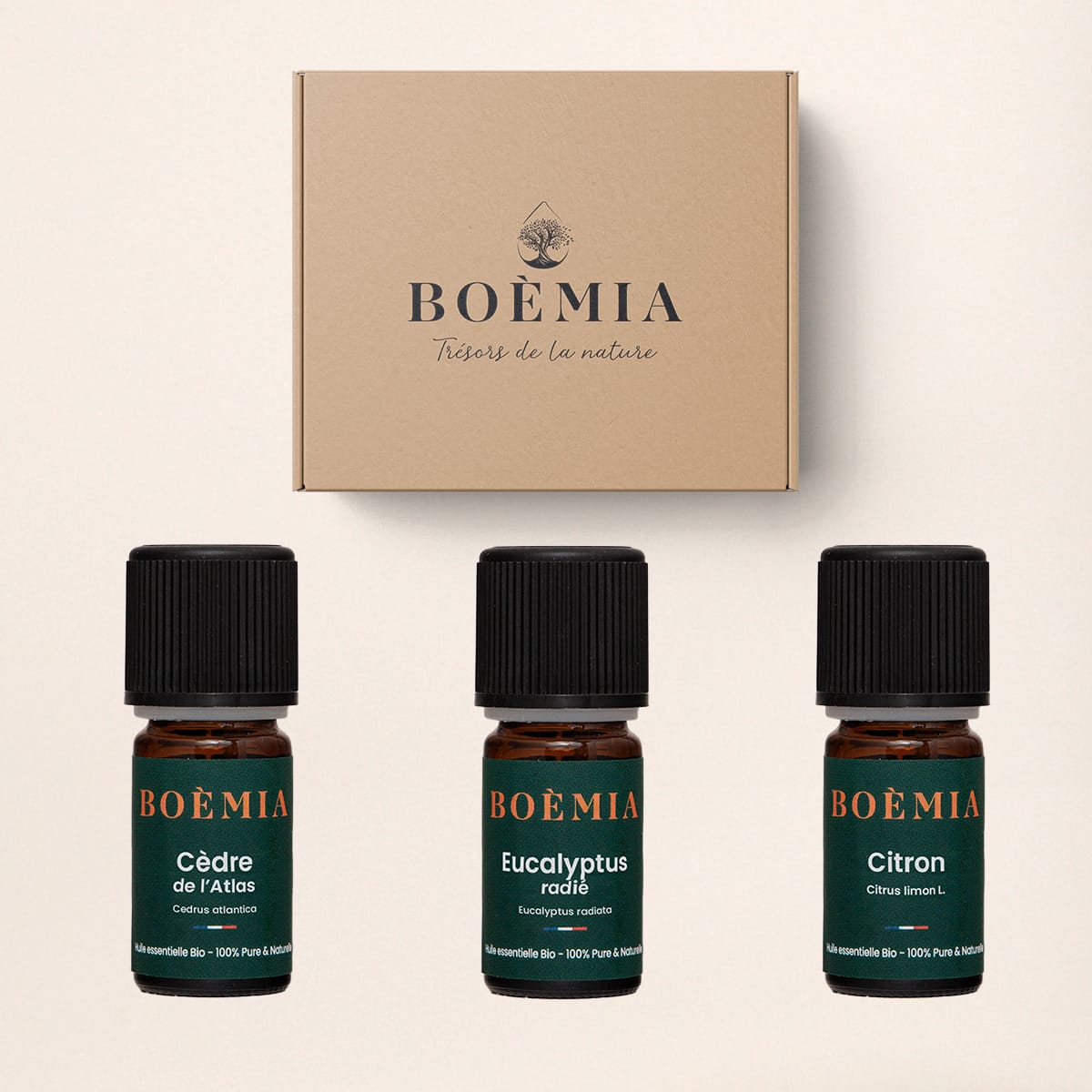
Diffusion set
18,50€FAQ : Answers to your questions
💧 How many drops of essential oil are needed in a mist diffuser?
For an ultrasonic diffuser (humidifier-type misting), add between 5 and 10 drops, depending on the size of the room. Always start with the minimum dose.
🌬 How many drops of essential oil in a nebulizer diffuser?
Nebulizing diffusers require no water. Just 5 to 12 drops, or less than 1 ml, are enough for effective diffusion, to be adjusted according to the surface.
🏡 Is it possible to perfume a room without an essential oil diffuser?
Yes, you can scent a room with an impregnated handkerchief, a pebble or a bowl of hot water containing a few drops of essential oil. But be careful not to saturate the air.
⚠️ Precautions for using essential oils in a diffuser
Some oils are not recommended: for example, peppermint or cinnamon can be irritating. Be careful in the presence of children, pregnant women or pets. Respect the dosage and use mild oils (lavender, fir, sweet orange…). Place your diffuser on a piece of furniture out of reach of children and babies.
🌿 Which essential oils to diffuse?
Many oils are suitable: fine lavender, sweet orange, lemon, Scots pine, ravintsara, ylang-ylang, etc. Consult the diffusion chart to check if an oil is compatible, for use pure or in synergy.
💨 Why diffuse essential oils?
Diffusion lets you enjoy the natural benefits of oils: relaxation, to purify the air, sleep, concentration, relax the nervous system, relieve stress, winter prevention, olfactory ambiance… It’s a simple way to create a healthy, pleasant atmosphere.
🧪 Pure essential oils for diffusion
Some oils can be diffused pure: lavender, ravintsara, sweet orange, eucalyptus radiata, lemon, etc. Always respect the quantities and duration (15 to 30 minutes maximum).
🚫 Essential oils not recommended for diffusion
Avoid diffusing oils such as wintergreen, thyme, savory and clove. They can be irritating or dangerous.
🧴 What are the different types of essential oil diffusers?
Ultrasonic: with water, cold mist, silent.
Nebulizer: water-free, powerful, concentrated.
Soft heat: gentle heating, ideal for small rooms.
Ventilation: portable, with fan.
📏 Why is it important to dose essential oils correctly?
The wrong dosage can cause headaches, irritation or air saturation. The right dosage allows you to enjoy the full effects without danger, while being ecological and economical. Read the instructions for correct use of each oil.
🎯 General recommendations for dosing essential oils indoors
Small room (10-15 m²): 3 to 5 drops
Medium-sized room (15-30 m²): 5 to 10 drops
Large rooms (>30 m²): 10 to 15 drops
Diffuse for 15 to 30 minutes maximum, 1 hour a day.
🧼 Practical advice to optimize the use of your diffuser
Proper maintenance preserves the quality of the aromatic diffusion and avoids deposits that can alter the effectiveness of the oils. After each use, we recommend emptying the reservoir of your ultrasonic atomizer or diffuser, then wiping with a soft cloth to remove any residue. Once a week, pour in a mixture of hot water and white vinegar, leave to act for 5 minutes, then rinse and dry thoroughly.
This simple trick prevents essential oil stagnation, prolongs the life of the device and ensures good concentration during subsequent diffusions. For best results, always follow the manufacturer’s instructions and choose a model suitable for your bathroom, living room or other room in the house.
Blog post

Editor: Camille Comet
Doctor of Pharmacy University Diploma (DU) in Aromatherapy
Fascinated by the power of plants since childhood, my expertise and passion focus on aromatherapy and the production of essential oils, with an ethical and ecological vision.