An essential oil alone is already powerful. But the right combination in a synergy opens up a whole world of effects. Relaxing, purifying, respiratory, digestive or simply olfactory, each well thought-out combination is based on a precise biochemical alchemy. A few drops of lavendera touch of petit grain bigaradea green note of rosemary oreucalyptus… and comfort becomes part of your daily routine.
Creating or using a synergy of essential oils is not a matter of improvisation. It means mastering dosages, knowing interactions, respecting precautions, and above all, aiming for therapeutic efficacy without compromising safety. This article offers a complete overview: formulation, rules of use, selection of organic essential oils (Roman chamomile, peppermint, lemon zest, ylang-ylang, ravintsara…), storage in amber bottles, cutaneous application, diffusion or respiratory route.
Ready to turn your diffuser into a true aromatherapy tool? Follow the guide.
Understanding essential oil synergies
Synergy: more than a blend
An essential oil complex is a combination of aromatic extracts carefully selected and dosed to work together. Unlike a simple assembly, synergy is based on a logic of interaction: the properties of each oil combine, support and sometimes even potentiate each other, to create a more global, precise and relevant effect.
In a soothing preparation, we can combine a sedative essential oil (lavender), a muscle relaxant (marjoram) and a nerve harmonizer (petit grain bigarade). Each acts on a complementary level, and it’s this intelligent combination that creates the desired effect.
🟡 Remember: well-thought-out synergy rests on three pillars:
A main oil (core action)
One or more support oils (reinforcements or modulators)
A harmonizing oil (balance, olfactory synergy)
Why combine several essential oils?
Using an essential oil alone may suffice, but some situations benefit from a targeted action that only a well-designed synergy can offer. Here are a few reasons to prefer a combination:
Enhance overall effectiveness bycombiningseveral mechanisms of action: antispasmodic + calming + digestive, for example.
Reduce individual concentrations, thus limiting the risk ofside effects.
Balance skin or olfactory tolerance, especially with dermocaustic or very potent oils.
Create a unique, richer, more subtle olfactory signature, often sought after for diffusion or massage.
Some examples of effective complexes
Here are a few concrete examples of common synergies:
| Purpose of use | Essential oils used | Method of application |
|---|---|---|
| Relaxation & sleep Serenity | True lavender essential oil + Chamomile essential oil + Ylang Ylang | Diffusion 30 min or wrist application diluted in a vegetable oil, e.g. Jojoba. |
| Breathing fluid | eucalyptus radiata essential oil + Ravintsara essential oil + linalool thyme essential oil | Diffusion or chest massage diluted in vegetable oil |
| Energy & mental clarity | lemon essential oil + peppermint essential oil + rosemary cineole 1.8 essential oil | Dry inhalation or morning roll-on |
Creating a synergy of essential oils is as much an art as a science. Each formulation is based on a precise biochemical logic: interaction between active ingredients, olfactory harmony and a clear therapeutic objective. A well thought-out synergy may contain lemon for freshness mandarin for soothing geranium or sage for balance.
At Boèmia, we distill or select each organic organic essential oil with rigor. As a producer, we pay close attention to quality, traceability, French origin and responsible sourcing. Each amber glass bottle preserves the potency of the formula, for optimal conservation and intact efficacy.
Using a synergy of essential oils safely
Creating or buying a natural synergy of essential oils is all very well. But knowing how to use them correctly is essential. Essential oils are powerful and concentrated, and must be handled with care if you are to reap their full benefits without risking undesirable effects.
The main applications
The cutaneous route is one of the most frequent andoptimal. It allows rapid diffusion throughout the body, while limiting digestive risks. To achieve this, essential oils must be blended with an organic vegetable oil (such as arnica macerate, apricot kernel oil or jojoba oil).
💡 Recommended dosage for synergy in cutaneous application:
Occasional topical use: 5 to 10% EO in vegetable oil
Daily or wide use: 1 to 5% depending on the area (20 drops of EO = approx. 1 ml)
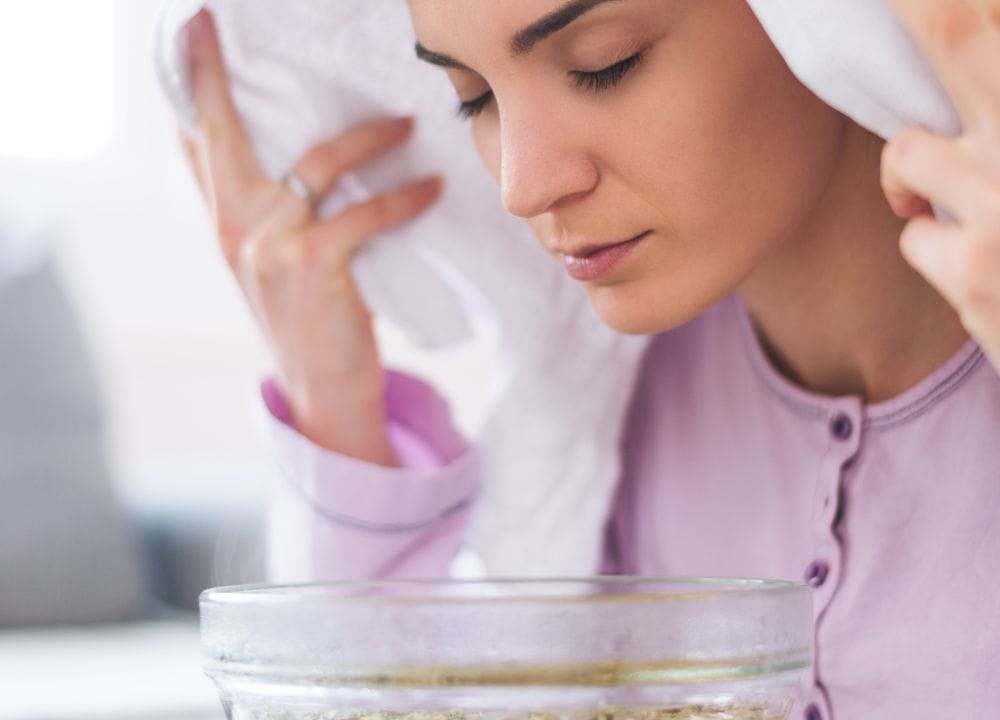
Atmospheric diffusion is ideal for calming, respiratory or meditative synergies. It is performed using an ultrasonic diffuser or a nebulizer.
⏱️ Recommended diffusion time :
10 to 20 minutes, 2 to 3 times a day maximum, in a well-ventilated room.
The oral route is only used in synergies formulated by a professional, and always on medical or pharmaceutical advice. There are significant risks involved (digestive irritation, drug interactions), especially when self-medicating.
Problems caused by misuse
Although natural, essential oils can have side effects if used incorrectly, especially in preparations where the active molecules add up.
Potential hazards include :
Skin irritation if dosage is not respected
Photosensitivity with certain oils (bergamot essential oil, lemon essential oil…)
Digestive disorders if ingested without suitable support
Excessive arousal or sedation, depending on the EO used, particularly with impacts on the nervous system
Neurotoxic risk with certain molecules (ketones, ethers, etc.) in the event of overdoseor prolonged use.
Essential precautions
To use your essential oil synergy with care, here are the basic rules:
Always dilute essential oils before applying to the skin.
Avoid the eye area and mucous membranes, and never inject them.
Do not use on children under 3, pregnant or breast-feeding women without medical advice.
Perform a skin test 24 hours before use (in the crease of the elbow).
Store synergies in a dark, tightly closed, tinted glass bottle.
Comparison of synergy utilization methods
| How to use | Benefits | Precautions | Indications |
|---|---|---|---|
| Cutaneous | Local or general result | Dilution imperative | Relaxation, pain, circulation… |
| Diffusion | Olfactory action on the nervous system | Duration and dosage | Stress, sleep, breathing … |
| Oral | Rapid systemic action | Medical advice essential | Digestion, infections, fatigue … |
Create a synergy tailored to your needs
Formulating an effective essential oil synergy requires a rigorous method, not magic. It’s not enough to blend oils that you like individually: the effectiveness of a synergy lies in the coherence between their properties, concentrations and biochemical compatibility.
Steps for formulating an effective synergy
1. Identify a specific need
Before creating, you need to focus. What are you looking to relieve or support? Stress? Difficult digestion? Temporary fatigue? Insomnia? The need determines the direction of the formulation.
2. Choose a main oil (“heart of action”)
This is the one that carries the central therapeutic response sought (e.g. lavender for sleep, ravintsara for immunity, lemon for tonus and good mood).
3. Add one or two complementary oils
These oils support, reinforce or extend the action of the main oil (e.g. marjoram to soothe, lemon to relax and energize).
4. Harmonize
A well thought-out synergy often includes a coherent oil: it softens the scent, creating a real olfactory signature (e.g. petit grain bigarade, sweet orange…).
The right doses for a balanced synergy
For home preparation, we recommend not exceeding :
3 to 5 essential oils maximum
Total essential oil: 10 to 30 drops for 10 ml base
For cutaneous use, dilute 1 to 5% in a vegetable oil.
Example: for a relaxing synergy roll-on 10 ml at 3%.
➜ 9.7 ml sweet almond vegetable oil
➜ 3 drops lavender + 2 drops sweet orange + 1 drop marjoram
Good formulation practices
Avoid duplication: for example, don’t use lavender + lavandin + spike lavender in the same synergy.
Think of biochemical families: too many phenols or ketones = irritation or neurotoxicity.
Balance scents: 1 top note (volatile), 1 middle note (balancing), 1 base note (fixing) for a pleasant synergy in diffusion.
Creating synergy is a bit like composing a perfume or a dish: it requires dosage, balance between ingredients and intention.
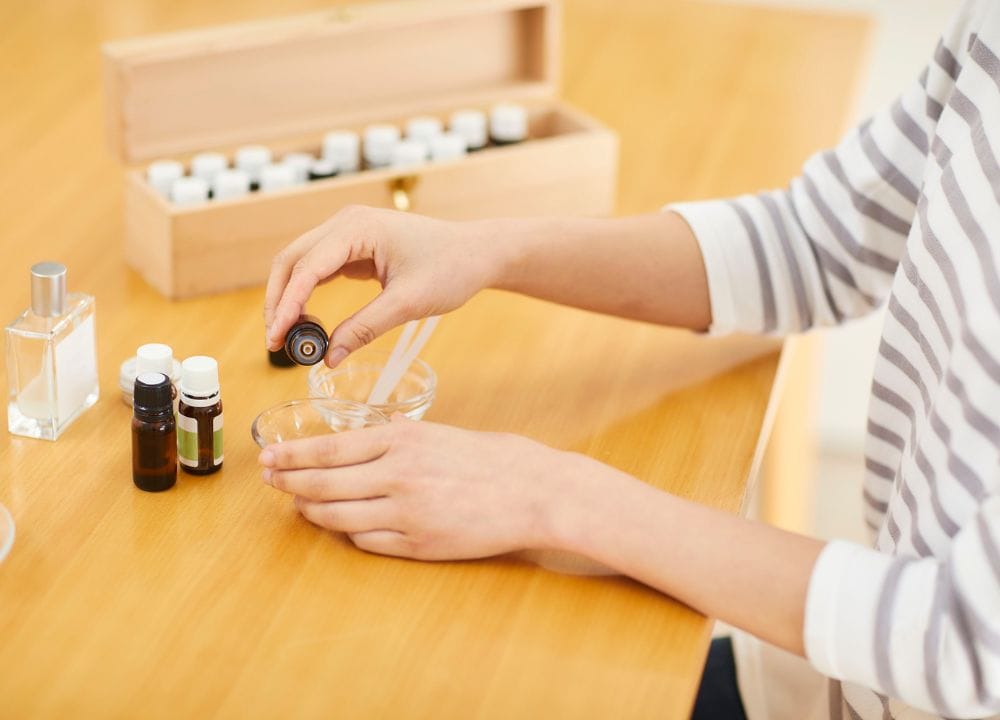
Example of a simple recipe to make at home
Anti-stress synergy roll-on (10 ml)
3 drops lavender essential oil
1 drop marjoram essential oil
Complete with sweet almond vegetable oil.
💡 Use: apply to inner wrists and breathe deeply 3 times, morning and evening. Ideal blend to prevent or relieve anxiety.
Properties and uses of synergies: from relaxation to concentration
When properly formulated and used, essential oil synergies deliver a more precise, faster and often longer-lasting action than an oil alone. By combining the right molecules, properties and dosages, we target a coherent therapeutic effect on both body and mind.
Better than a single oil: the benefits of synergy
Each essential oil has one ormoremain properties. By combining them intelligently, you can :
amplify a desired effect (in particular, relax the nervous system with several anti-stress agents),
act on several mechanisms at once (pain + inflammation + spasm),
modulate the power of certain oils with milder ones.
This is what enables a synergy to target a clear objective, while respecting the skin, emotions and physiology.
Examples of synergies according to needs
🌙 Calm andsleep
True lavender essential oil + Roman (or noble) chamomile essential oil + marjoram essential oil
Benefits: sedative, relaxing, reduces nervous tension and helps you fall asleep.
Use: evening diffusion, or apply to the solar plexus diluted at 3%.
🌬️ Breathing & immunity
Ravintsara essential oil + Eucalyptus radiata essential oil + Thyme linalol essential oil
Benefits: antiviral, expectorant, immune tonic.
Use: preventive diffusion or chest massage (diluted in sesame vegetableoil).
🔥 Concentration & mental clarity
Lemon essential oil + Peppermint essential oil + Rosemary cineole essential oil
Benefits: stimulates the nervous system, intellectual tonic, clarifying.
Use: dry inhalation (handkerchief), or short diffusion in the middle of the day.
🧘♀️ Focus: synergies for meditation
Certain essential oils have a direct impact on areas of the brain linked to memory, emotions and grounding. Properly chosen, they support meditative practices, promoting :
concentration (stabilizing, rooting effect),
mental appeasement,
emotional or spiritual openness.
Here is an effective meditation synergy to diffuse before or during the session:
2 drops frankincense essential oil (clarifies and relieves),
2 drops of Atlas cedar essential oil (emotional anchoring)
🎧 Idea to listen to: a guided meditation podcast with olfactory integration (soft voice + breathing with synergy)
Choosing the right synergy: personalized advice
Faced with the diversity of essential oils and possible combinations, it’s easy to feel lost. Which synergy should you choose to relax? To sleep better? To regain energy? For digestive comfort? There is no universal blend or ready-made solution: an effective formula is always adapted to your specific needs, your terrain and your olfactory sensitivity.
How to choose the right synergy?
1. Identify your wellness or therapeutic objective
Slow digestion or occasional spasms?
Difficulty falling asleep or waking up at night?
Each problem requires a slightly different approach. The wording needs to reflect your reality, your symptoms.
2. Take into account your terrain and contraindications
Pregnant women? Children? Liver or neurological problems?
Some oils, such as rosemary verbenone or EO rich in ketones, are not suitable for everyone.
3. Listen to your nose and your feelings
The choice of scent is an excellent indicator. Do you like a composition? Does it attract you? Chances are it meets an unconscious emotional need.
💡 Good to know: our limbic system (seat of our emotions) reacts within seconds to a scent. This can influence the effectiveness of a synergy through reflex action or memory.
💧 And hydrolats?
We talk a lot about essential oil synergies, but did you know that the principle of synergy also works with hydrolats (also known as floral waters) such as verbena, sage and orange blossom? Read our article on the difference between hydrolats and floral waters.
By combining several hydrolats with complementary properties, we can create very gentle formulas, ideal for children, pregnant women or sensitive individuals. Whether used as a drink, a mist, a compress or a skin care product, a well-thought-out combination of floral waters can provide real daily support, with subtle but lasting effectiveness.
At Boèmia, we also develop ready-to-use hydrolate blends, for those who want an alternative without essential oils, but just as sensory and beneficial.
The professional's role in personalized advice
If you have any doubts or complex needs, it is advisable to be accompanied by a health professional trained in aromatherapy (pharmacist, naturopath, specialized doctor…).
At Boemia, we believe in a human and sensorial approach: a synergy is not a standard product. It’s a living tool that works subtly, and often powerfully.
Aromatherapy involves much more than simply releasing a few drops into the air. It’s a technique in its own right, requiring expertise, precision and respect for plants. A ready-to-use synergy can relieve, refocus or stimulate, provided you follow the right rules: correct dosage, appropriate application, cool storage and careful selection of the essences used. Whether you’re looking for a zen effect for the whole family, eucalyptus-based respiratory support, or an organic olfactory gesture to accompany your emotions, our essential oils provide the ideal basis for creating your own natural, long-lasting synergies.
Conclusion: the art of synergy, between science, meaning and simplicity
Creating or choosing a combination of essential oils is a conscious process, in tune with yourself and the specific properties of each oil. Whether you’re looking to restore calm, support immunity or clear the mind, synergies offer a more complete, more relevant action than the isolated use of a single oil.
But using essential oils successfully requires knowledge, precision and, above all, respect for the power of plants.
Explore our selection of organic essential oils on the Boèmia website: lemon, ylang, eucalyptus, scots pine, tea tree… organically grown, 100% pure and natural. Packaged in amber glass bottles for optimal conservation, our oils meet the requirements of professional aromatherapy. Fast Colissimo delivery, guaranteed traceability, responsive customer service: quality from field to bottle.
👉 Would you like to create formulas that are effective, safe and beautiful to use?
Visit our essential oil range and our vegetable oil range. You can also consult our hydrolat range.
FAQ - Your questions about essential oil synergies
Where can I buy a ready-to-use essential oil synergy?
Creating your own synergies is a real pleasure: you can adjust them to your needs, get to know each plant better, and benefit from lower prices. It’s also a simple and rewarding way to learn how each oil works (active ingredient, function, purpose, dosage…).
But we know that not everyone has the time or inclination to formulate. That’s why we offer on our site synergy formulas, designed by experts, which you can create using organically grown essential oils such as rose geraniumrose geranium verbenaor citrus limon.
Each product is carefully formulated by our producer, and we invite you to create it in an amber glass bottle, which you can select and will be delivered with your order of essential oils. You can easily add the materials you need to create your favorite synergy to your basket.
How many drops of synergy should be diffused with a diffuser?
This depends on the number of drops in the formula and the surface area of the room. In general, 5 to 10 drops are enough in an ultrasonic diffuser to create a harmonious ambience. If you use a nebulizer, only a few drops are needed. Always follow the advice in your complete guide.
It’s the assurance of enjoying a zen, stimulating or relaxing olfactory ambiance, directly at home, by diffusion.
Can a synergy replace an essential oil on its own?
Not always. Each synergy has a precise purpose: it contains several active ingredients selected to act together in a targeted way. A single essential oil may suffice for certain simple uses (e.g. lemon for vitality), but as soon as the need becomes complex (overall relaxation, respiratory support, digestive comfort), a well thought-out synergy will enable you to take full advantage of the power of plants.
I don't know what to choose. Can you help me?
Of course! Whether you want to create your own synergy usingorganic essential oils, or select a ready-to-use synergy, our team is here to help you. If you can’t find the answer you’re looking for on our blog, please contact us directly via our our contact form or leave us a message. We’ll take your preferences, your terrain and your needs into account to guide you towards the most suitable formula.

Editor: Camille Comet
Doctor of Pharmacy University Diploma (DU) in Aromatherapy
Fascinated by the power of plants since childhood, my expertise and passion focus on aromatherapy and the production of essential oils, with an ethical and ecological vision.
Professionals, retailers or therapists?
This way 👉 Essential oils for professionals