Imagine water from the steam that slowly passes through a rose, chamomile or cornflower flower. This steam, charged with aromatic molecules, condenses in the still, giving rise to a hydrolat: a natural, pure, aqueous extract… and incredibly rich in benefits.
Whether it’s finelavenderfor sensitive skin, peppermint for oily skin, or orange blossom to soothe irritated skin, each hydrolat is a subtle concentrate of nature, obtained without preservatives, through a controlled steam distillation process.
But what’s the difference between a floral water and an essential oil? What is a hydrolat really used for? Which raw material to choose for which skin type? In this article, you’ll discover how to use these organic floral waters in your facial care, for your your hairyour home recipes or even in the kitchen.
Ready to plunge into the fascinating world of natural aromatic waters? Let us guide you.
1. A clear, scientific definition of a hydrolat
A hydrolat, also known as floral water or hydrosol, is a water-based product (aqueous phase) obtained from the steam distillation of an aromatic plant. Itcontains water-soluble active molecules and is a natural, gentle, low-concentration extract.
Difference between hydrolat, floral water and essential oil
Hydrolat is the by-product of plant distillation, containing a low concentration of active ingredients. The essential oil, on the other hand, is the supernatant oily phase, which is much more concentrated. When the distilled part is a flower (rose, chamomile…), the hydrolat is also called floral water. Find out more in our article on the difference between floral water and hydrolat.
What does the law say?
Hydrolats can be considered cosmetic or food-grade, depending on their purity, preservation method (no preservatives) and certified organic origin.
2. How is a hydrosol obtained?
Hydrosols are obtained by steam distillation in a still. The steam carries away the plant’s aromatic compounds, which are then condensed to separate the essential oil andaromatic water (hydrolat).
The principle of distillation
This process enables active molecules to besteam-entrained.
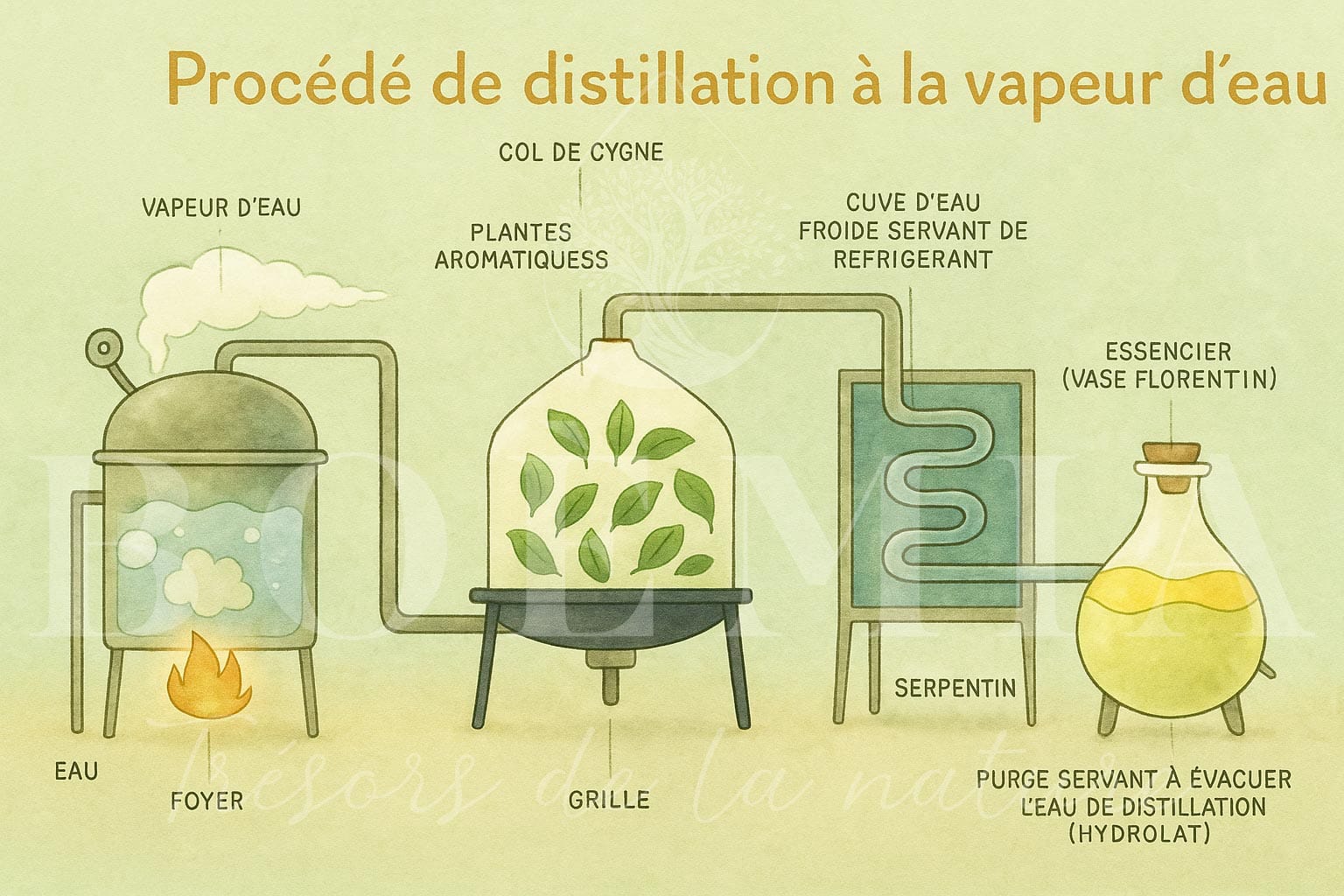
Manufacturing stages
Harvesting the plant
Placing in the still
Heats water to generate steam
Steam passes through the plant for several hours
Condensation and separation to obtain essential oil andfloral water
What we recover: essential oil vs. hydrolate
The essential oil floats on top of the hydrosol. These two phases are separated at the end of the process.
3. What are hydrolats used for?
Hydrolats are used for their gentle, soothing, tonic or purifying properties, depending on the plant distilled.
Benefits for skin and hair
Each hydrolat bears the signature of the plant from which it is derived. A discreet but effective signature, often surprising in its effects. These subtle yet powerful plant extracts act as a backdrop, without ever saturating the skin or the senses.
On the skin, hydrolats can regulate, refresh, calm or rebalance. It’s a daily support, a way of supporting the skin’s ecosystem without upsetting it. Apply them as a toning mist, a targeted compress or the heart of a homemade blend, and they immediately find their place in a simple yet demanding routine.
Internally, certain hydrolats, when well-chosen and correctly diluted (always pure and natural, without preservatives, derived from distillation), can support the body in its elimination, recovery and relaxation functions. This is a still confidential but valuable avenue of use, which deserves to be passed on with rigor.
In the kitchen, edible hydrosols are finding their place in refined preparations. This is not a gadget trend: it’s another way of extendingthe benefits of the plant to the plate, without saturation and with precise dosage. A mintfloral water or an orange blossom hydrosolused sparingly, transform an infusion or dessert. And these are just two conventional examples, we invite you to give free rein to your creativity and explore them all. Aleppo pine hydrosol, thyme hydrolate, lavenderfloral water all combinations are possible. You can download our special guide to hydrolat in cooking.
Choosing a quality hydrolat means accepting to slow down and listen to plants in a different way. At Boèmia, this commitment extends from the raw material to the bottle, so that each aqueous product retains the living character of the plant.
4. How to use hydrolats
Hydrolats can be easily integrated into a daily routine, both in cosmetics and in natural skin care. They are versatile, gentle and effective.
💆♀️ In cosmetics: a simple, sensorial skincare routine
In the morning, they replace toning lotion: a few spritzes of hydrolat wake up the skin, tighten pores and calm redness. In the evening, they soothe, purify and leave skin feeling clean before bedtime.
Applied neat as a mist, compress or cotton pad, they are suitable for all sensitive skin types, including children’s.
🥄 In-house: hydrolatherapy
Some hydrolats can be taken orally, provided they are organic, 100% pure, preservative-free and rigorously distilled. One teaspoon diluted in a glass of water is all you need for a 20-day course of treatment. It’s a treatment from within, with targeted effects depending on the plant chosen (digestion, stress, drainage…).
🌀 Other clever uses
Hydrolats can also be used as :
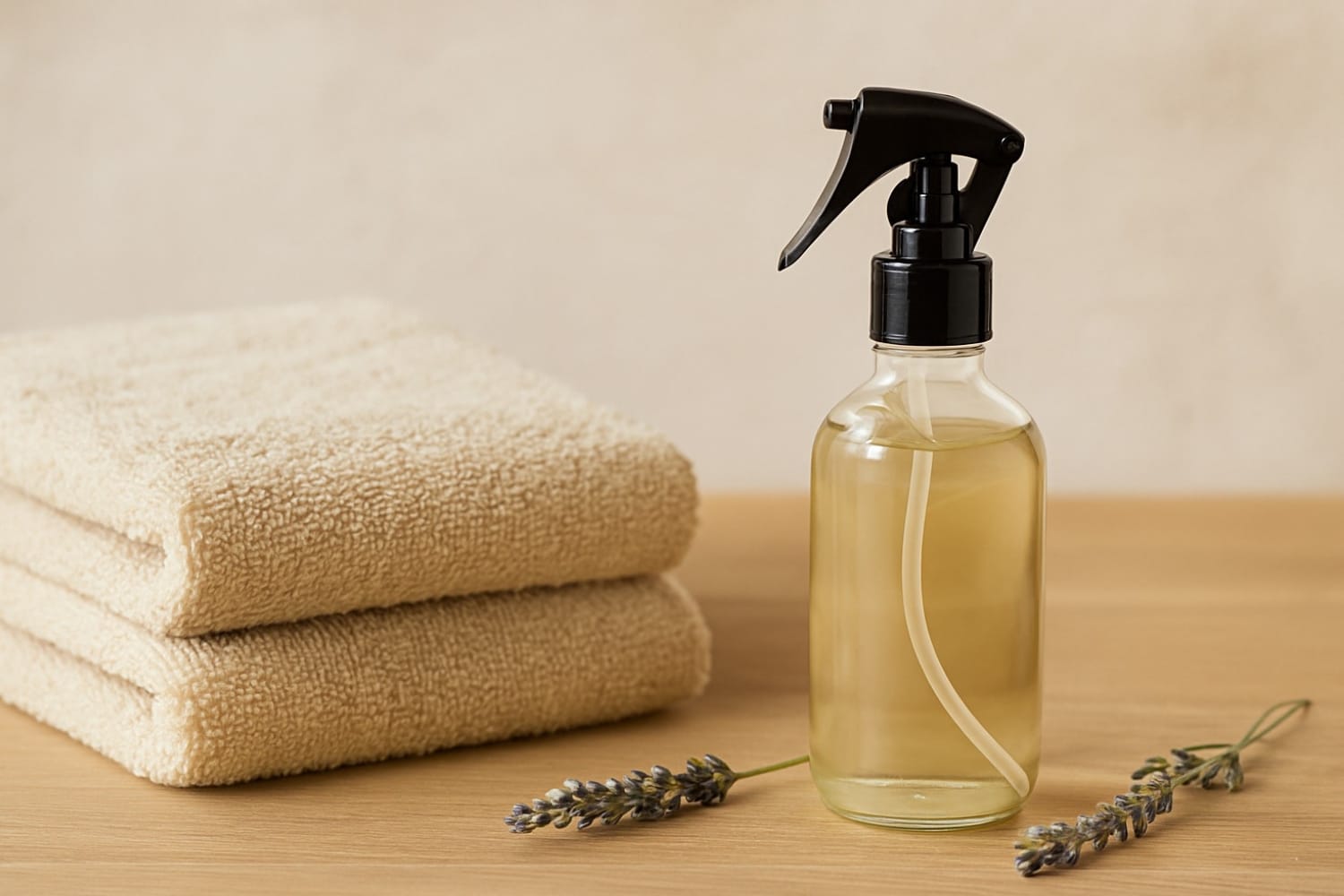
room mist or linen,
baby care,
or animal care.
One product, a thousand uses: as long as you choose a quality hydrolat.
5. Choosing the right hydrosol
Hydrolats and floral waters are more than just perfumed lotions: they are genuine aqueous products rich in active aromatic molecules, produced by steam distillation. Their choice therefore deserves special attention. It depends on your skin typeyour needs, and above all the quality of the natural raw materials used.
🔍 By skin type
Dry skin: choose a flower hydrosol with gentle notes, such asrose floral water or orange blossomtwo classic organic flower hydrosols with recognized benefits for tight or irritated skin. Applying them regularly helps you take full advantage of their soothing action.
Combination skin: thefine lavender hydrosol (or officinal lavender) or rose geranium hydrosols balance oily areas without irritating even the most sensitive. These pure, natural hydrosols are among the most widely used in distilled organic cosmetics.
Oily skin: when using hydrosols for purifying purposes, consider thyme linalol or sage officinale hydrosols. Their astringent and toning action helps regulate excess sebum, while leaving the skin feeling fresh and soft.
🎯 By specific need
Anti-aging care: hydrolate ofitalian helichrysumhydrolate, rich in volatile aromatic compounds, supports the development of skin tissue and contributes to the regeneration of mature skin.
Sensitive eyes: thecornflower hydrosolfrom the small blue flowers of the Asteraceae family, is an emblematic example. Used as a compress, it soothes eye contours while providing optimal comfort.
Minor injuries, healing: thelavender hydrosola gentle, versatile raw material, can be used as a pure hydrolate or blended with a vegetable oil neutral (such as sesame), depending on the desired use.
🌿 Best-known hydrolats
Among the many popular waters:
the famous sage plant.
All have specific properties and are used as part of a daily routine, both in cosmetics and in gentle aromatherapy.
📌 Boèmia tip: for each hydrolat you choose, ask yourself what part of the plant was distilled, and always favor organic hydrolats from artisanal extraction, guaranteed preservative- and alcohol-free. That’s the way we work at Boèmia: we take great care to ensure that each active ingredient is used with the utmost care, at every stage of the distillation cycle.
6. Storage of hydrolats
A good hydrolat is a living product. To preserve its benefits and natural fragrance, you need to follow a few simple rules.
🧊 Before and after opening
Before opening: store your bottle in a cool, dark place.
After opening: if possible, refrigerate! The cold slows down oxidation and preserves the active ingredients. At the very least, store in a cool, dark place.
🧪 Recognizing expired hydrosols
Sour or “off” odor
Presence of unusual deposits
Cloudy liquid or visible filaments
♻️ Tips for extending service life
Use a tinted spray bottle
Avoid contact with skin or fingers
Close tightly after use
Precautions and contraindications
Although gentle and natural, hydrosols in cosmetics need to be used with care.
👶 Sensitive audiences
For pregnant women, breastfeeding mothers and babies, opt for gentle hydrosols such as chamomile, orange blossom or rose.
Avoid strong herbs(sage, peppermint) unless clearly indicated.
🥤 O ral
Never ingest a hydrosol containing preservatives
You can seek advice from a healthcare professional, especially for internal cures.
To learn more about the benefits anduses of hydrolats, we recommend Se soigner avec les hydrolats by Françoise Couic-Marinier, Christine Cieur and Laure Destephe Vidal, published by Terre Vivante. This comprehensive guide presents 27 hydrolats and their properties, and offers practical advice on how to use them safely on a daily basis, whether in cosmetics, cooking or family aromatherapy. It is aimed at beginners and health professionals alike. Available in our online store.
How to choose a quality hydrosol?
Boèmia is committed to impeccable quality, based on exacting distillation methods and ethical sourcing.
📋 Reading a label with confidence
100% pure and natural” label
Botanical name of plant
Distilled organ (flower, leaf…)
Distillation date
Organiclabel
🔬 Boèmia excellence criteria
Slow, low-pressure distillation
No added preservatives
High ratio: minimum 1 kg of plant per liter of hydrosol
Post-distillation rest in the shade for several weeks
Copper alembic for a subtle exchange between plant and metal
🛒 Where to buy?
Small, passionate producers
Pharmacies, herbalists, artisanal organic brands
Beware of transparent bottles or those with no clear origin
Why choose an organic hydrosol?
An organic hydrolat is a guarantee of care that respects your skin, the plant… and the planet.
✅ What an organic label guarantees
No pesticides
Traceable origin
Hand-crafted method complying with organic specifications
At Boèmia, our hydrolats are certified organic, with no alcohol, preservatives or additives. They respect the plant and enhance its aromatic power.
In a nutshell: why use hydrosols on a daily basis?
Hydrolats are natural, versatile skincare products, accessible to all women seeking simple, sensorial and effective beauty.
✨ The 5 main reasons
Suitable for all skin types, even sensitive ones
Rich in mild aromatic active ingredients
Multi-purpose: face, hair, internal use, cooking
Safe for children, babies and pregnant women (if well-chosen)
Easily integrated into a natural beauty routine
At Boèmia, we’ve opted for the highest standards: hand-picked organic or wild plants, slow distillation in copper stills, concentrated, living hydrolats.
🌿 Discover our collection of organic hydrolats, 100% pure and natural, and (re)discover the power of plant simplicity.