🔎 This article is part of our complete dossier: Essential oils and colds – the complete guide.
Dry cough is one of winter’s most tiring ailments: cough after cough, the throat becomes irritated, sleep disappears and the body is exhausted. Unlike wet coughs, no mucus is evacuated; only an inflamed mucous membrane triggers this painful reflex.
At such times, essential oils are a precious resource. Ravintsara to support the immune system, evergreencypress with its anti-cough properties, linalool thyme or thujanol thyme to treat infection, eucalyptus radiata to soothe the respiratory tract, peppermint with its refreshing effects… each plant has targeted properties.
Used for chest massage, inhalation or in a spoonful of honey, they are effective natural solutions for calming, soothing and relieving. This step-by-step guide explains how to use them, their precautions and their most useful recipes.
What is a dry cough and how can you tell it apart?
A dry cough is characterized by persistent discomfort in the throat and bronchial tubes, with no production of mucus. It can have various causes:
a viral infection at the onset of a cold or flu,
irritation caused by pollution, smoking or an excessively dry atmosphere,
a respiratory allergy,
gastroesophageal reflux disease,
more rarely, a chronic pathology or a more serious problem of the respiratory system.
Dry, nocturnal coughs are particularly common, as lying down accentuates irritation. If the cough persists for several weeks, becomes chronic or is accompanied by worrying symptoms (blood, chest pain, weight loss, history of cancer), it’s essential to consult a doctor.
Which essential oils for dry coughs?
Certain essential oils have antitussive, anti-inflammatory and soothing properties on respiratory mucous membranes. Properly chosen and used, they help calm dry coughs, reduce coughing fits and soothe irritated throats.
Evergreen cypress essential oil: the anti-cough reference
Cypress de Provence is ideal for dry coughs. Its antitussive action is clear on coughing fits, including nocturnal ones. I’ve seen it have a spectacular effect on stubborn whooping cough fits. Rich in monoterpenes (including alpha-pinene), it has a decongestant effect and provides real respiratory comfort.
How do I use it? Apply to the skin, diluted in a vegetable oil, and massage into the outer throat and upper chest. In the case of a very spasmodic cough, it can be combined with red myrtle.
Cautions: not recommended if you have a history of hormone-dependent cancer. Avoid use by pregnant and breast-feeding women. Age of use: 6 years and over.
Ravintsara essential oil: antiviral and immune support
The ravintsararich in 1,8-cineole, provides real antiviral support and helps the body get through winter episodes. Its benefits for dry coughs lie in its anti-infectious action and its good skin tolerance profile.
How to use it? As a diluted massage on the chest and upper back, once a day for a few days, as soon as the first signs appear. As an option, it can be taken on a neutral tablet or in a spoonful of honey, but the cutaneous route remains practical and effective.
Red myrtle essential oil: the key to mixed coughs
When a dry cough becomes mixed (dry with the onset of congestion), red myrtle red myrtle is relevant. Myrtenyl acetate gives it an antispasmodic action that soothes coughs while helping to better regulate secretions.
How to use it? In diluted synergy with cypress for episodes when dry coughs tend to become congested.
Thyme essential oil: choosing the right chemotype
- Linalool thyme or thujanol thyme Mild profiles, good for irritated throats and dry coughs, well tolerated on the skin.
- Thyme à thymol: reserved for short, targeted uses.
How to use? In small quantities, diluted to reinforce a cypress or ravintsara base, depending on the context.
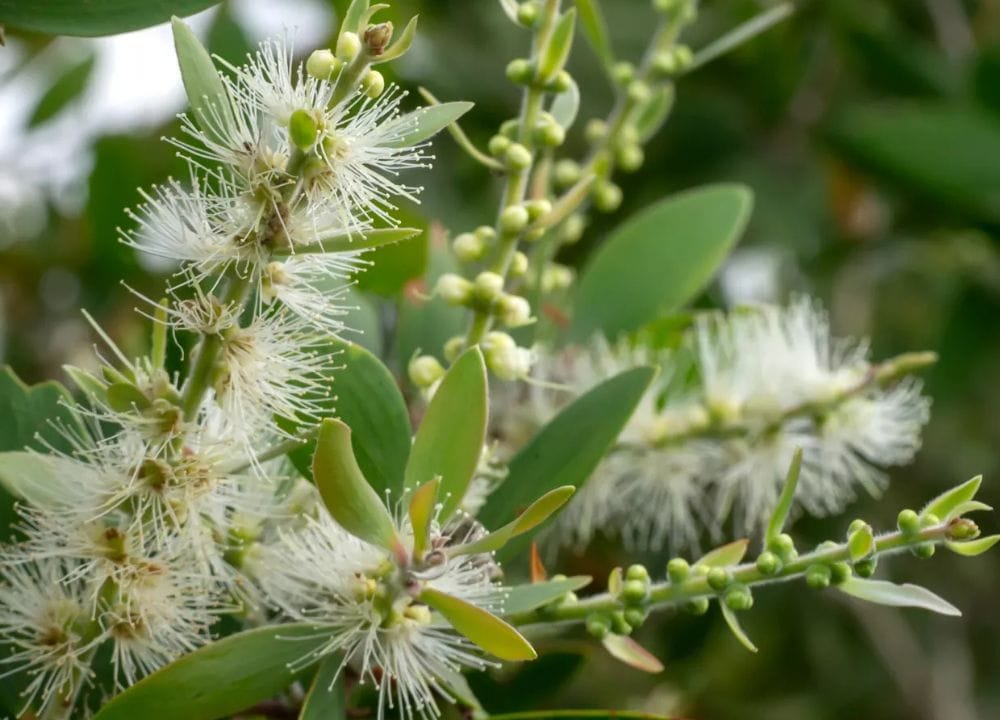
Tea tree essential oil: complementary anti-infectives
The tea tree is not a first-line cough suppressant, but its anti-infectious activity makes it a good partner when a dry cough episode occurs in the context of bronchitis.
How should it be used? As an occasional support, always diluted in a synergy.
Peppermint essential oil: refreshing effect
L’peppermint essential oil will be useful for easing the cough reflex during tiring coughs, in a small percentage in a synergy.
Cautions: not recommended for children under 6, not recommended for pregnant women and not recommended for breast-feeding women. Always dilute.
Other support sometimes cited
Fine lavender essential oil Soothing, calming, anti-inflammatory, soothes irritated mucous membranes.
Eucalyptus radiata Often used for respiratory ailments, it lightly liquefies secretions and promotes freer breathing.
The rosemary cineole can also be used as a support oil, particularly when dry coughs are accompanied by respiratory discomfort or are developing into congestion. Its mild expectorant properties and tonic action make it an interesting complementary oil in certain synergies, depending on the indication.
How to use essential oils for dry coughs?
The main routes of administration
Cutaneous use: dilute a few drops of essential oil in a vegetable oil (sweet almondsesame) and massage into the chest or upper back.
Oral route: place one drop on a neutral tablet or in a teaspoon of honey. This method allows direct contact with the irritated throat, which can be unpleasant.
Inhalation: inhale warm water vapours with 1 to 2 drops of essential oil (ravintsara, cypress). This helps soothe dry coughs and clear the respiratory tract.
Diffusion: in a suitable diffuser, for a gentler action on the entire respiratory system.
Practical tip: a well-managed cutaneous route is effective for treating dry coughs; the active molecules cross the skin barrier and enter the circulation. This avoids bad taste and digestive discomfort, while preserving the benefits.
What are the effects of essential oils?
The essential oils listed combine several useful properties against dry coughs:
Antitussive, i.e. to fight coughs (cypress, linalool thyme),
Soothing and anti-inflammatory (lavender, lemon eucalyptus),
Anti-infectives (ravintsara, tea tree, linalool or thujanol thyme ),
Decongestants (peppermint, cypress).
NB: Some oils are expectorant, a property which is not appropriate here in the context of dry coughs.
Their combined action helps to soothe coughs, relieve sore throats, limit inflammation and support the immune system. We recommend diluting them in an oil to create your own synergy(aromatherapy recipe).
Aromatic synergies to relieve dry coughs
To enhance the effectiveness of essential oils, it is possible to create customized blends. These preparations combine several plants with complementary properties to provide a targeted natural treatment for respiratory ailments. Here are 4 concrete examples, easy to make and safe to use.
1. Dry cough (Cypress + Red myrtle)
2 drops of evergreen cypress
1 drop red myrtle (Myrtus communis, rich in myrtenyl acetate)
1 teaspoon mildvegetable oil (sesame or almond)
Use: massage the outer throat and upper chest, twice a day, for up to 4 to 5 days.
Why this synergy?
Evergreen cypress acts as a recognized cough suppressant, particularly useful for calming dry coughs. Myrtle, thanks to myrtenyl acetate, reinforces the action with its antispasmodic and soothing effect. Together, these two essential oils reduce the frequency and intensity of coughing fits, while improving respiratory comfort.
Precautions for use :
Cypress should be avoided if you have a history of hormone-dependent cancer (breast, ovary, prostate).
Preparation reserved for adults and children aged 7 and over.
Always use a vegetable oil diluted for the skin.
A word about aromatherapy:
When used properly, the cutaneous route is just as effective as the oral route. Aromatic molecules cross the skin barrier and enter the bloodstream, offering the same therapeutic benefits, without the sometimes unpleasant taste or digestive risks.
2. Irritated throat (Thujanol thyme + Lemon Eucalyptus)
1 drop of thujanol thyme
1 drop lemon eucalyptus
1 teaspoon mildvegetable oil
Use: Apply locally to the throat, one to three times a day for 3 days. Thujanol supports the gentle anti-infectious action, while lemon eucalyptus calms inflammation and reduces pain.
3. Immune defenses (Ravintsara + Thyme linalol, 5% skin preparation)
Preparation in a 10 ml bottle:
10 drops ravintsara
10 drops linalool thyme
Top up to the top of the bottle with a mild vegetable oil (sesame or almond).
→ This yields a 5% dilution (around 20 drops of essential oils for 10 ml ofvegetable oil).
Utilization : massage 5 to 6 drops of the mixture into the chest and upper back, once a day for 3 to 5 days, at the first signs of winter infection.
Ravintsara effectively supports the immune system and helps fight viral infections. Gentle, well-tolerated linalool thyme reinforces the anti-infectious effect, while remaining suitable for the cutaneous route.
4. Children's alternative (Hydrolat of fine lavender)
1 teaspoon of fine lavender hydrosol in a glass of lukewarm water, to be drunk 2 times a day.
A mild, well-tolerated solution, ideal for soothing sensitive throats and reducing dry coughs in children.
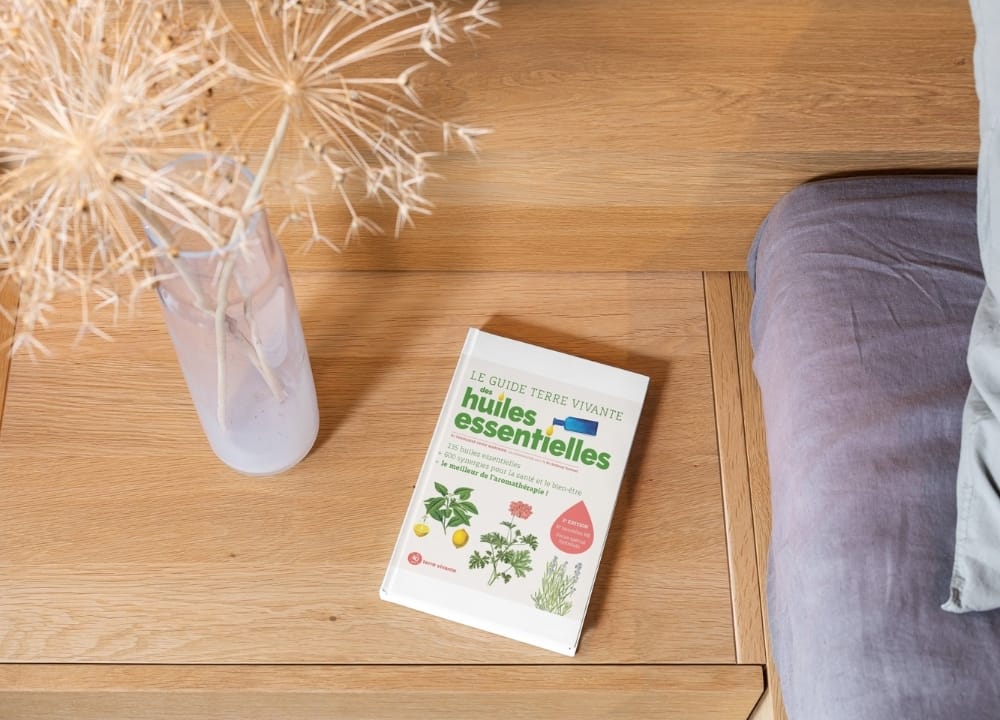
These synergies, inspired in part by the work of Françoise Couic-Marinier, show how each plant, tree or flower can provide a targeted benefit depending on the indication. For a reliable source of recipes, advice and detailed explanations, we recommend the book Terre Vivante Guide to Essential Oilsavailable in our store.
How can I relieve a sore throat?
When it comes to soothing a sore throat, essential oils are still at the heart of the treatment. They can be complemented by a few simple gestures that reinforce their effectiveness.
Regular hydration is essential: drinking lukewarm water and soothing thyme infusions helps maintain a protective film on the mucous membranes. Honey, renowned for its soothing properties, can be added to a spoonful or a hot drink to soothe the throat.
The humidity of the ambient air also plays a role: using a diffuser or a bowl of water near a radiator helps to limit dry mucous membranes and reduce irritation. For children, hydrolats such as fine lavender offer a gentle, well-tolerated alternative. These simple methods, combined with essential oils chosen for their anti-inflammatory and soothing properties, provide a complete and effective response to treating irritated throats and restoring comfort to everyday life.
Essential precautions for use
Essential oils have a powerful action and need to be used safely. Before any preparation, every precaution must be taken to limit any risks or side effects.
Medical advice is recommended if a dry cough persists for more than a few days, especially in children, asthmatics or those with sensitive skin. A doctor’s consultation becomes essential when a chronic cough sets in, when a hacking cough persists, or when there is a serious pathological antecedent.
Certain essential oils, such as cypress and peppermint, are not recommended for pregnant or breast-feeding women. For adults, it is essential to always dilute the chosen drops in a
Finally, internal use is to be preferred after professional advice, and essential oils are not to be used on infants. These simple rules guarantee safe, effective use, while protecting the body from complications.
Conclusion
Dry coughs can quickly become tiresome and a burden on everyday life. Essential oils such as ravintsara, cypress, linalool thyme or lemon eucalyptus are real allies in calming coughs, soothing irritated throats and supporting the body. Used as a skin massage, gentle inhalation or in a simple preparation, they offer natural, appropriate and effective solutions.
What makes the difference is choosing essential oils of impeccable quality. Boèmia’s essential oils are carefully distilled from local plants or controlled supply chains, and offered direct from the producer. The advice you have just read has been written by the same people who grow, distill and prepare these bottles: so you can be sure of using authentic products, designed to be both powerful and safe.
By choosing Boèmia, you gain access to top-of-the-range essential oils, prepared by passionate pharmacists and distillers, available directly from our online boutique. Now it’s up to you to take full advantage of these natural benefits to regain comfort and serenity.
⚠️ Disclaimer
This information is provided for guidance only and is not intended to replace medical advice or consultation with a healthcare professional. Essential oils should always be diluted in a vegetable oil before application, and used with care, as they are powerful concentrates. Their efficacy may vary according to the origin of the plant, the galenic form chosen and the time of use.
A natural remedy never dispenses with appropriate follow-up care, especially if the ailments persist, if signs affect the bronchi, or in the case of nocturnal coughs or dry coughs lasting more than a few minutes on a daily basis. Essential oils are a great source of benefits, but they need to be used with care: always bear in mind that behind each bottle is the power of the plant you’re holding in your hands.

Editor: Camille Comet
Doctor of Pharmacy University Diploma (DU) in Aromatherapy
Fascinated by the power of plants since childhood, my expertise and passion focus on aromatherapy and the production of essential oils, with an ethical and ecological vision.