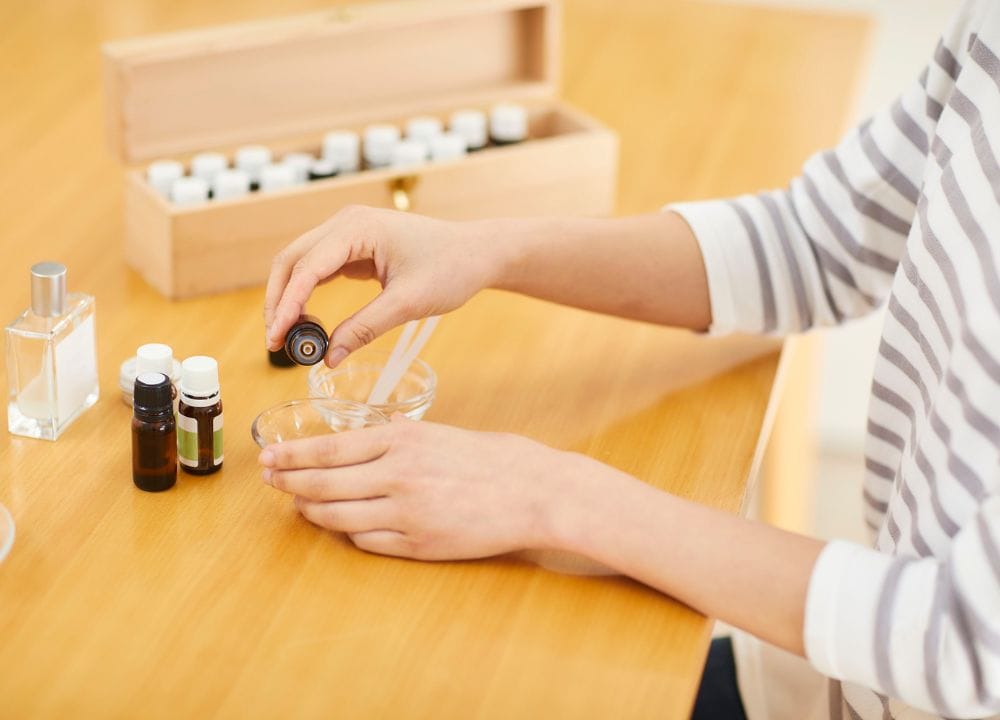
Camille Comet is a Doctor of Pharmacy and Aromatherapist. She uses artisanal essential oils and Boemia products in her workshops and consultations.
She will be a regular contributor to the site, bringing you her point of view and her secrets as a pharmacist.
In this article, she takes stock of the situation and suggests solutions for a common problem in the context of the COVID19 epidemic: loss of smell.
Loss of sense of smell:
Do you know someone who suffers from it? Perhaps you’ve experienced it yourself?
Anosmia (= absence of smell) is affecting more and more people. Sudden loss of smell is a very common symptom in Covid-19 patients, affecting around two-thirds of sufferers.
This disorder can be very disabling if it is long-lasting.
During my time as a pharmacist, many patients have told me about their experiences.
Loss of smell can :
- Being partial (hyposmia): “I hardly smell at all, it’s as if the volume of smells had been turned down”.
- More rarely total (anosmia): “I don’t feel anything at all”.
- A distorted sense of smell (parosmia): “Familiar smells have become different” (e.g. confusing the smell of mint essential oil with that of lavender).
- Or through the perception of non-existent odors (phantosmia): “I smell non-existent odors” (e.g. a gas odor).
Understanding anosmia
Smell or olfaction is the sense by which animals perceive odors.
Olfaction is a vital sense for many species, e.g. for foraging activities, predator avoidance, locating territory and other individuals, and so on.
The human sense of smell is less developed than in other animals, but we can still distinguish subtle odors, such as essential oils.
Losing one’s sense of smell has a direct impact on quality of life, and even seems to reduce life expectancy.
How do we perceive a scent?
Odors (volatile molecules) are detected by receptors in the nose.
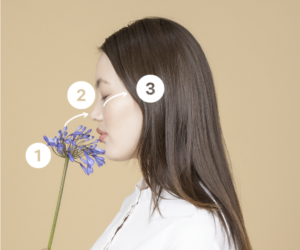
When an odorant molecule binds to the receptor of an olfactory cell (1), a signal is transmitted by a cable (the axon) to the olfactory bulb in the brain (2). The brain translates this signal into an interpretation: odor (3).
Why have you lost your sense of smell?
While it’s interesting to understand what’s going on inside your body, understanding how you lost your sense of smell will help you regain it more quickly.
In the case of Covid 19 infection, patients describe the loss of sense of smell as sudden in onset, often associated with loss of taste.
The olfactory mucosa is a small region in the upper part of the nasal cavity, containing different types of cells.
- Olfactory neurons, the receptors for odors,
- and support cells, which ensure the structure of the mucosa.
These cells carry receptors to which SARS-CoV2 binds and infects them. The virus then causes the death of the supporting cells and, indirectly, the destruction of olfactory neurons.
Edema (swelling) of this area is also a possible cause of the change in smell. You’ve probably already experienced this during a cold, when your nose is particularly blocked.
In most cases, regeneration is possible. Distortions of the sense of smell (phantosmia and parosmia) even reflect this regeneration.
In some people, these problems persist for more than a month: the edema has disappeared, but inflammation persists. There may also be lasting damage to sensory cells.
When should I consult?
According to HAS (Haute Autorité de Santé), sudden anosmia occurring in the context of the Covid-19 pandemic is sufficient to suspect SARS-CoV-2 infection, and no further tests are required.
Consultation of an ENT doctor is indicated after 2 months, if the above-mentioned symptoms persist (hyposmia, anosmia, sensation of nasal discomfort or obstruction, fluctuations in sense of smell).
Rediscover your sense of smell
Did you know thatrehabilitation is possible? The earlier you start, the better the results. Stimulation accelerates the recovery of olfactory capacities by promoting cell regeneration.
SARS-CoV2 is not the first virus to cause olfactory disorders. Work has already been carried out to assess the ability of people recovering from an infection to regain their sense of smell.
If the loss of smell persists 15 days after the onset of symptoms, you can perform saline nose washes, combined with olfactory retraining.
It is vital to start olfactory re-education as soon as possible, as this is still the only treatment that has proved effective in the management of post-viral anosmia.
Thanks to essential oils, and in just 10 minutes a day, you can retrain your nose to detect and identify smells.
Rehabilitation protocol
This is the protocol recommended by the HAS, with a few personal modifications inspired by another protocol drawn up by Hirac GURDEN, neurobiologist and director of neuroscience research at the CNRS.
Preparation:
Get the following essential oils:
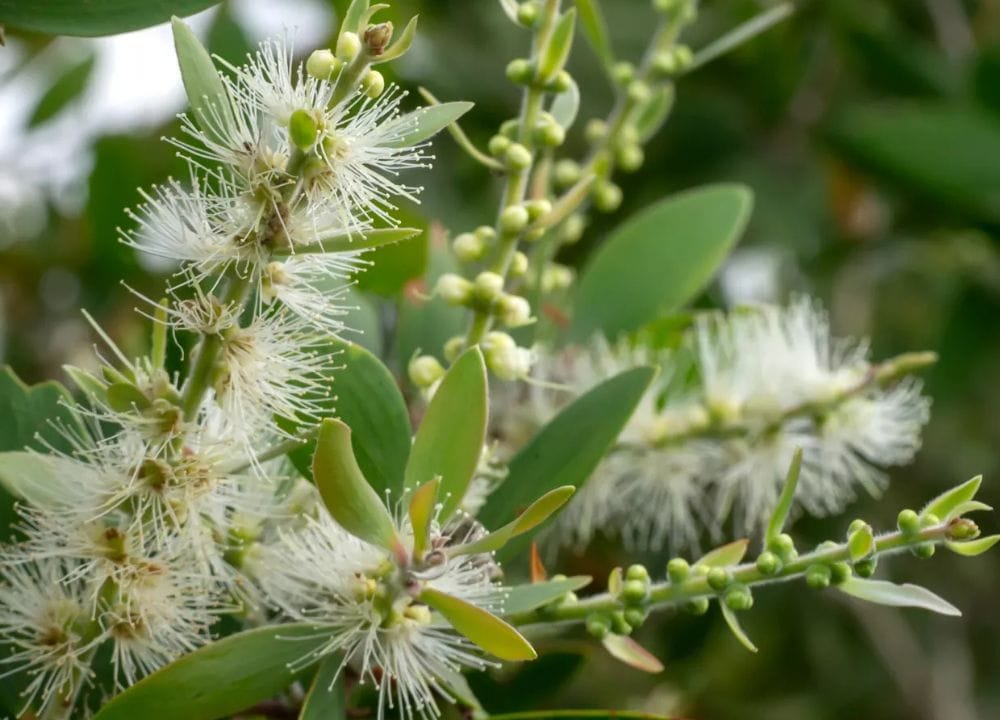
– Eucalyptus globulus essential oil
You can also add:
– Wine vinegar
– Curry
– Café
– Vanilla powder
– Place all spices in airtight containers (lidded jars) to preserve their full olfactory potential.
– The essential oils are also placed in airtight jars with water (20 drops of essential oil for 50 ml of water).
– Each jar should be labelled with the name of the product it contains. Choose identical containers so as not to influence identification.
Product selection :
Wondering where to find the best essential oils for this protocol?
I’ve come across the finest oils from real producers, artisan distilleries, and sometimes in organic stores that have selected quality producers.
Choosing top-quality essential oils is important. Their aromatic complexity is essential for rehabilitation.
The criteria for selecting a quality essential oil are :
- Quality of plant cultivation, harvesting and transport.
A quality plant has been treated with gentleness and care, whether at planting, during cultivation or harvesting.
- Distillation or the art of transforming a plant into essential oil.
High-quality plants, carefully cultivated and harvested by hand when fully ripe, are distilled to extract the best possible essential oil. The process and the care taken at this decisive stage of production play key roles in the quality of the essential oil extracted. quality of the extracted essential oil.
So choose your oils from a producer like Boèmia. Take an interest in your essential oil brand’s values and production methods.
Training :
- Frequency: 2 times a day (morning and evening).
- Conditions : Place yourself in a quiet room (allowing maximum concentration) and avoid any source of olfactory distraction (perfume, candlelight, cooking smells, etc.) and gustatory distraction (away from meals).
Protocol (to be carried out for each product) :
- Carefully read the name of the product you are about to smell to stimulate your olfactory memory.
- Uncork the product and smell it for 15 seconds, placing it about two centimetres from the nose and moving back and forth from right to left to stimulate both nostrils.
- Recap the product and wait 15 seconds before moving on to the next product.
- Follow-up: Every week (every Sunday, for example), do a blind test. Smell the bottles without reading the label, and note the smells you perceive (Did I smell something or not?) and the smells you recognize (Am I able to tell which product it is?).
This protocol is not recommended for people with contraindications to the use of one or more essential oils.
Essential oils: Not just scents!
The selected essential oils listed above are ideal for training the sense of smell. Some also have healing properties:
- Reduced inflammation,
- Decongestion
- Immuno-stimulation
- Anti-viral action.
So there’s real hope that people with anosmia can regain their sense of smell.
In conclusion, as a scientist and aromatherapy enthusiast, I’m delighted to see essential oils recognized for their usefulness by the health authorities. Another small step towards their wider use in modern medicine.