🔎 This article is part of our complete dossier: Essential oil and colds – the complete guide.
Your nose is blocked, secretion is constantly running, your head feels heavy, and every minute feels like a struggle to breathe. Are you looking for a fast, natural and effective treatment?
Aromatherapy offers proven solutions. A single drop of eucalyptus radiata in a bowl of hot water for inhalation clears the sinuses and thins mucus. A blend of ravintsara and tea tree, gently massaged with a vegetable oil, helps stop infection and boost the immune system.. A short diffusion of niaouli or thyme linalol purifies indoor air and prevents superinfection.
But beware: essential oils are not harmless products. Depending on age (child, adult), profile(pregnant woman, epileptic or asthmatic) and route of use, safety and dilution rules change. Find out in this comprehensive guide how to use them properly, which recipes to choose and how to avoid usage errors for natural, powerful and long-lasting relief.
Understanding why the nose gets blocked
A blocked nose isn’t just about mucus. Above all, it’s a defense reaction: the nasal mucosa becomes inflamed, swells and secretes more fluid to trap pathogens. Congestion can occur for a number of reasons. The most common, of course, is the viral coldwhich affects millions of people every year. But seasonal allergies, sinusitis or simply overly dry, polluted air can also cause the same feeling of congestion.
In all cases, the mechanism is identical: air has trouble circulating, you breathe through your mouth, your throat dries out and fatigue increases. Conventional solutions (saline, decongestant sprays) are useful, but have their limits. Chemical decongestants can provide rapid relief, but should not be used for more than a few days, as they can have a rebound effect, leaving the nose even more blocked. Aromatherapy offers an interesting alternative: certain essential oils provide real relief, while respecting the body’s natural functions.
The best essential oils for a blocked nose
Not all essential oils are created equal when it comes to clearing the respiratory tract. A few stand out for their effectiveness and good tolerance.
- Eucalyptus radiata is the undisputed star of the ENT world. Rich in 1,8-cineole, it has a mucolytic and expectorant action, liquefying mucus and facilitating its evacuation. When inhaled or diffused, it rapidly clears the nasal passages. Its fresh, penetrating fragrance is immediately associated with the idea of clear breathing.
- Peppermint essential oil is known for its menthol, which produces a sensation of intense coolness. This coolness has an almost instantaneous effect on the perception of breathing: even if menthol doesn’t actually open the nasal cavity, it sends a signal to the brain that gives the impression of breathing better. Peppermint can also relieve the headaches often associated with congestion. However, its use should be avoided by children under six and pregnant women.
- Ravintsara, native to Madagascar, acts on another level. Its antiviral and immunostimulant properties make it a precious ally in the heart of winter. In the event of a cold, it helps the body fight the virus, supports natural defenses and helps relieve congestion.
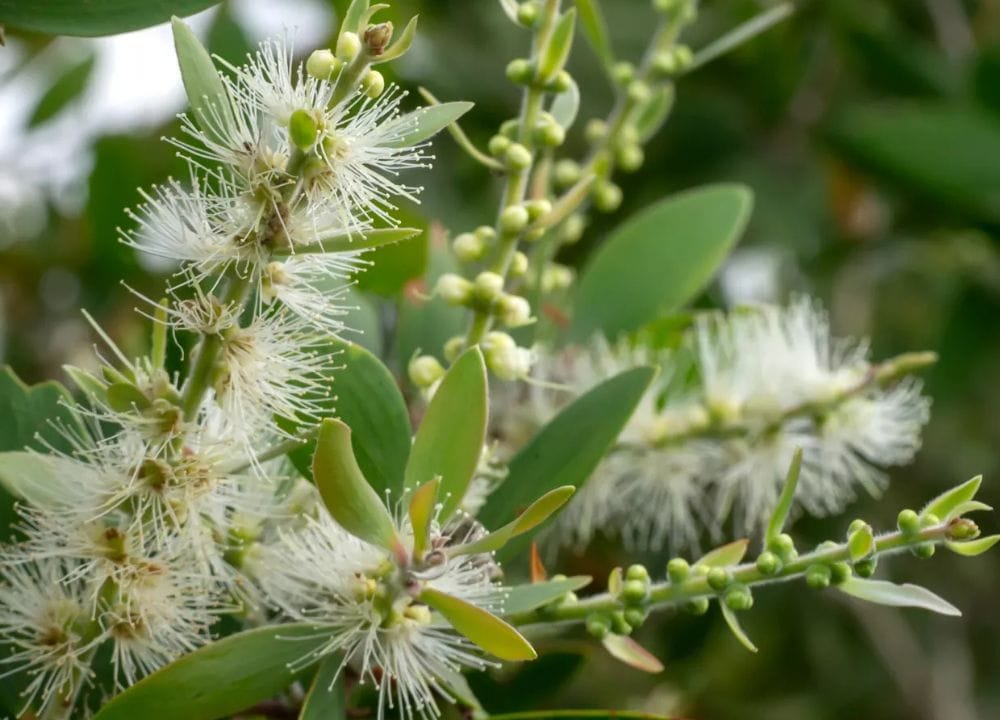
- Tea tree is a universal anti-infective. Its antibacterial and antiviral action is a useful complement of the preceding oils, especially if you want to prevent superinfections. Well tolerated, it can be used alone or in synergy.
To these essentials, you can add a few complementary oils as needed. Niaouli, closely related to eucalyptusremains a safe bet for sinusitis. The linalool thymeis gentler and more suitable for fragile skin or older children. The noble laurelhas a fluidifying and immunostimulant action, making it an interesting addition to a preparation. But there are also lesser-known oils that deserve attention: cypresscypress essential oilfor example, helps reduce excessivenasal discharge thanks to its regulating properties. The silver fir andsprucefrom mountain forests, offer a balsamic fragrance that clears and soothes and soothes wet coughs and sinus discomfort.. Finally, the green myrtle has an expectorant and slightly antiviral action, useful for eliminating secretions and relieving persistent nasal congestion.
How to use them effectively for nose relief?
One of the great advantages of essential oils is the variety of ways in which they can be used. For blocked noses, certain methods are particularly suitable.
- Inhalation remains the most direct method. In thewet inhalation version, warm water is poured into a bowl.and add two drops ofeucalyptus radiata or niaouli, then breathe in deeply for five to ten minutes. This fast-acting method thins secretions and soothes mucous membranes. For the dry version, simply place a drop on a handkerchief or in an inhaler stick and breathe in regularly throughout the day.
- Skin application is also interesting, as long as dilutions are respected. Mix with a vegetable oil (sweet almond, sesameapricot kernel), essential oils can be massaged into the chest, upper back or wings of the nose (without ever touching the mucous membranes). This simple gesture combines effectiveness and comfort, while providing a soothing effect.
- Atmospheric diffusion allows you to purify the air in a room while benefiting from the respiratory effect of the oils. Ten minutes of diffusion ofeucalyptus radiata or ravintsara is enough to feel an improvement, especially in a bedroom before bedtime.
- As for the oral route, it remains marginal and should only be considered with professional advice. Some pharmaceutical preparations encapsulate the oils for safe use, but these are not self-medication.
- Nosewashes are another essential reflex in the event of congestion. Be careful, however: adding essential oils directly to a saline solution doesn’t work, as they don’t mix with water and could irritate the mucous membrane. On the other hand, hydrolats (dosed at a maximum of 10% of the mixture) can safely enrich these washes. L’thyme linalol hydrosol is an effective accompaniment to a cold, whilefine lavender hydrosol orroman chamomile hydrosol provide a soothing effect.
Making your own saline solution
When the nose is blocked, washing with saline solution is a simple and effective procedure. You can prepare your own solution at home, provided you use the right proportions.
A distinction is made between two preparations:
Isotonic solution (0.9% salt): its composition is close to that of our body fluids. It gently cleanses, moisturizes and liquefies secretions. This is the solution of choice for daily use by adults and children alike.
Hypertonic solution (2% salt): more concentrated, it attracts water from the nasal mucosa and helps relieve congestion. It is useful for colds with a blocked nose, but should only be used occasionally, as it can be irritating if repeated too often.
Preparation (for 100 ml solution)
Boiled and cooled water (or mineral water): 100 ml
Non-iodized fine salt, no additives:
– 1 g for isotonic solution
– 2 g for hypertonic solution
Mix well until completely dissolved. Store in a clean bottle, sterilized if possible, and discard after 24 hours to avoid contamination.
Why does it work? The benefits of essential oils
What distinguishes essential oils from simple sprays are their active molecules. Eucalyptus and niaouli, rich in cineole, liquefy secretions and encourage their flow. Peppermint, with its menthol, provides a cooling effect, perceived as easier breathing. Ravintsara and tea tree attack the virus by boosting the immune system and limiting inflammation.
Effectiveness is not limited to the nose: by unblocking the respiratory tract, essential oils improve sleep quality, reduce fatigue and prevent the spread of infection to the bronchi. It’s a holistic approach, combining immediate relief with in-depth action.
Special cases: caution and adaptation
Aromatherapy is not without its precautions, and a blocked nose is no reason to forget safety rules.
For children, essential oils should be used with discretion. Linalool thyme can be diffused from age 1 and inhaled from age 3. Peppermint, on the other hand, should not be used before age 6, as it may cause respiratory spasms. For younger children, hydrolats offer a safer yet effective alternative.
Caution is advised for pregnant and breast-feeding women. Most essential oils are not recommended, especially during the first trimester. Some, such aseucalyptus radiata in low doses, may be considered later on under medical advice, but it’s better to use hydrolats, which have fewerside effects.
People with asthma, epilepsy or allergies also need to be vigilant. Eucalyptus inhalation can sometimes trigger an asthma attack. In such cases, medical advice is essential.
The mistakes to avoid are simple but important: never put pure essential oil directly into the nose, always follow the dosage instructions, and discontinue use immediately in the event of a skin or respiratory reaction.
Olfaction, an often underestimated lever
It’s important to remember that the effectiveness of essential oils also depends on their scent. When you inhale a powerful scent like eucalyptus or mint, the brain receives a sensory signal that goes far beyond the local action. The olfactory bulb is directly linked to the limbic system, the area of emotions and memory. This is why a breath can provoke a feeling of comfort and freedom, sometimes even before the physiological effect has begun.
This olfactory dimension also explains why some people feel immediately better after breathing in a few drops on a handkerchief: the brain associates the smell with fresh air and well-being, amplifying the feeling of relief.
Practical tips and simple recipes
Aromatherapy benefits from being concrete. Here are a few easy-to-implement examples.
| Recipe / Situation | Preparation | Use | Precautions & advice |
|---|---|---|---|
| Express hot inhalation | In a bowl ofhot water, add 2 drops of eucalyptus radiata EO + 1 drop of thyme linalol EO. | Inhale the steam for 5 minutes, 1 to 2 times a day | Helps thin mucus, relieve blocked noses (decongest) and cold symptoms. Avoid use onchildren < 6 years. |
| Chest massage (adults) | Mix 2 drops of Scots pine + 2 drops of tea tree in 1 teaspoon of sesame vegetable oil. | Apply to the chest and upper back, massaging for 3 to 5 minutes, morning and evening. | Expectorant, mucolytic, anti-infectious action. Do not use |
| Short diffusion | Mix tea tree + ravintsara + rosemary cineole in a diffuser. | Diffuse for 8 to 10 minutes, 1 to 2 times a day. | Helps fight viruses (antiviral) and prevent superinfection. Choose an organic product from a controlled source. |
| Mild alternative (children, pregnant women) | One capful of laurel hydrosol diluted in a saline solution (such as sea water), as a nasal wash. | Irrigate several times a day directly into the nostrils. | Suitable for asthma sufferers and fragile profiles. No side effects, recommended for prevention. |
| Special cases | Adapt oils as needed (e.g. wet cough, runny nose) | Always dilute. Ask for personalized advice in case ofallergy or sensitive skin. Consult a doctor if symptoms worsen. |
Choosing the right essential oil
Aromatherapists insist on this point: choosing reliable essential oils is the first step in treating a blocked or runny nose.
Quality is essential to guarantee efficacy and safety. A good essential oil should bear the plant’s Latin name, mention its chemotype, geographical origin and distillation method. The bottle should be made of tinted glass with a dropper cap. It’s best to use organic oils, with no additives or dilutions.
At Boèmia, we are committed to transparency and high standards: each bottle is distilled by hand, with complete traceability from the plant to the finished product. This is your assurance of using essential oils that are reliable, effective and respectful of your health.
Conclusion
A blocked nose, whether due to a cold, sinusitis or allergy, need not be a fatality. Aromatherapy offers natural, effective and affordable solutions, provided you follow the rules of use.Eucalyptus radiata, peppermint and ravintsara are among the most effective essential oils, combining rapid relief with immune support. But their use must be judicious, adapted to each individual profile, and always combined with the simple gestures that promote healing: rest, moisturizing and humidifying the ambient air.
Breathe freely again, get a good night’s sleep and reduce fatigue: that’s what essential oils can do when chosen and used wisely.
👉 Discover our selection of organic and artisanal essential oils on the Boèmia store, and choose the synergy best suited to take care of you naturally.
📚 Continue reading :
- Essential oil inhalation
- Dry cough essential oil

Editor: Camille Comet
Doctor of Pharmacy University Diploma (DU) in Aromatherapy
Fascinated by the power of plants since childhood, my expertise and passion focus on aromatherapy and the production of essential oils, with an ethical and ecological vision.