L’essential oil of peppermint is a true concentrate of plant power. Renowned for its antispasmodic, analgesic and digestive properties, it is often used to relieve headaches, nausea, muscular pain and digestive disorders. But this oil, however beneficial, is not without its risks.
Its high menthol and menthone content makes it an effective but potentially toxic product, particularly in the event of overdosage, poorly controlledapplication to the skin or excessive inhalation. In certain individuals – notably children, pregnant women, asthmatics or epileptics – its use can lead to severe adverse reactions: convulsions, respiratory disorders, skin irritation…
Before applying a drop to your skin or diffusing it in your home, it’s essential to know the contraindications, precautions for use and advice from health professionals. Using an essential oil means enjoying its benefits while avoiding its dangers. Find out how to use peppermint safely, to benefit from its virtues without running unnecessary risks.
Whether you’re a regular user or new to aromatherapy, it’s essential to be aware of its potential risks, especially if you’re using it for loved ones. This article, written by Camille Comet, pharmacist and essential oil producer, guides you through the safe use of this oil and how to get the most out of it, without endangering those around you.
Dangers of peppermint essential oil: sensitive populations and hidden risks
Peppermint essential oil (Mentha piperita is its Latin name) is powerful. Used correctly, it offers many benefits, but it can be risky if incorrectly dosed or misused. Its main contraindications concern certain vulnerable populations and excessive use. Here’s what you need to know before using it.
Dangers for children and vulnerable populations
Peppermint is a common oil and not one to be taken lightly, especially by babies, children and pregnant women. Its main risk lies in its neurotoxic effects. For children under 6, its use is strictly inadvisable. Why not? The high menthol and menthone content can cause severe respiratory disorders, such as laryngeal spasm, and even epileptic seizures. Children are more sensitive to these effects because of their still-developing nervous systems (ability to affect the myelin sheath).
Pregnant and breast-feeding women are also at risk. Peppermint’s neurotoxic compounds can cross the placental barrier and affect the fetus. It can also cause uterine contractions and abortion. During the breast-feeding period, it can alter the taste of milk and cause adverse reactions in infants.Peppermint essential oil is therefore prohibited throughout pregnancy and breastfeeding.
These contraindications particularly concern children, epileptics and those suffering from cardiac or neurological disorders. The oil is also considered irritating to mucous membranes, and should always be diluted before being taken orally or applied to the scalp.
Toxicity related to menthone and menthol concentration
Peppermint’s strength can also make it a problem, and that’s its composition with certain substances. Although peppermint comes from the leaves of a plant, its toxicology can be similar to that of a drug.
Its concentration in menthol and menthone (ketone) is the key to its toxicity. In small doses, these molecules are harmless and even beneficial, but if too high, they present neurotoxicity, hepatotoxic potential (liver toxicity) and, in some cases, nephrotoxic potential (kidney toxicity). Peppermint is thus contraindicated in epileptics. Menthol, in particular, can cause nervous and respiratory disorders, especially if applied undiluted to the skin or ingested in excessive quantities.
The dose makes the poison: even a natural product like an essential oil can become toxic if misused. It is therefore essential to respect the recommended (low) daily doses and always dilute the oil in a vegetable oil before applying to the skin. This powerful action explains why peppermint is sometimes used in complementary medicine for targeted digestive or neurological relief. But this power requires rigor and discernment in its use.
L’peppermint essential oil may interact with certain drugs by altering their metabolism. It is known to inhibit certain liver enzymes (CYP450) responsible for drug elimination, which can lead to an accumulation of these substances in the body and potentially increase the risk of side effects. For example, it can reduce the effectiveness of certain heart medications, such as calcium channel blockers. It is therefore crucial to consult a health professional before using peppermint essential oil.peppermint essential oil if you are taking any medication, to avoid potentially dangerous interactions.
The benefits of peppermint essential oil: a powerful ally, if used properly
Despite these dangers,peppermint essential oil remains a treasure trove of benefits when used with care. Its analgesic, digestive and stimulant properties make it a must-have in any natural health care kit. But remember, it’s all a question of dosage.
The World Health Organization (WHO) recognizes thatpeppermint essential oil has been scientifically proven effective in treating irritable bowel syndrome( IBS ), as well as certain digestive disorders such as flatulence and gastritis. Externally, this essential oil is also reputed to relieve muscular pain and headaches.
Relieves pain and headaches
Peppermint essential oil is widely recognized for its analgesic properties, and is in fact its best-known use. For massage, diluted in a vegetable oilit rapidly relieves muscular pains, migraines and neuralgia. Applied to the temples (avoiding the eyes), it is particularly effective in soothing headaches, thanks to its cooling, decongestant effect.
Peppermint essential oil is renowned for its analgesic properties, thanks in particular to the menthol it contains. Menthol activates TRPM8 receptors, responsible for the sensation of cold, resulting in a local anesthetic cooling effect and reduced pain perception. This action is particularly beneficial for relieving headaches and muscular pains.
Clinical studies have compared the efficacy of topical application ofpeppermint essential oil with that of paracetamol. Results indicate thatpeppermint essentialoil is as effective as 1 gram of paracetamol in relieving nervous tension headaches.
By combining the use ofpeppermint essential oil with analgesics such as paracetamol, a stronger analgesic effect can be achieved. This synergy potentiates the relief of migraine and muscle pain, offering a complementary approach to pain management.
However, it is essential to consult a healthcare professional before combining these treatments, to ensure safe use adapted to your personal situation.
Aids digestion and relieves nausea
Peppermint essential oil is renowned for its powerful digestive properties. Used in small quantities (1 to 2 drops diluted in a vegetable vegetable oil or on a neutral medium), it helps calm intestinal spasms, relieve bloating and promote better digestion. It’s a precious ally for copious meals and difficult digestion.
In addition, it is often used to relieve nausea and motion sickness. Whether you suffer from motion sickness or nausea due to digestive disorders, a few drops on a handkerchief to inhale can offer rapid relief. However, never exceed the recommended dose, and avoid prolonged use without medical advice.
Other benefits: toning and revitalizing
In addition to its effects on digestion and pain,peppermint essentialoil is also a natural tonic. Thanks to its stimulating properties, it can help combat mental fatigue and improve concentration. When diffused, it revitalizes the mind and provides a fresh burst of energy.
It is also used to stimulate blood circulation, particularly in cases of heavy legs or water retention. A leg massage withpeppermint essential oildiluted in a vegetable oil (such assweet almond oil), helps revitalize circulation and provides a pleasant sensation of lightness.
In cosmetics, peppermint essential oil is sometimes incorporated into hair care products to tone the scalp and stimulate microcirculation. A few well-diluted drops can leave hair feeling fresh and light, especially in homemade conditioners.
Using peppermint essential oil safely
Faced with its many benefits and risks, how can you enjoy this oil safely? Here are a few simple tips for safely incorporatingpeppermint essentialoil intoyour daily routine.
Practical tips for safe aromatic use
Dilution :
L’peppermint essential oil should always be diluted before application to the skin. A 1-2% dilution in a vegetable oil (such assweet almond oil) is ideal for cutaneous use, i.e. 1 drop mixed in 5 ml ofvegetable oil. It is advisable to keep the active ingredient content below 5%.
Allergy test:
Before using it for the first time, perform a skin test by applying a small amount of the diluted mixture to the hollow of the elbow. Wait 24 hours to check for any reaction.
Respect quantities:
Care must be taken with Mentha piperita, whatever the route of use. Whether diffused, inhaled or ingested (under the supervision of a health professional, excluding food flavoring), it is essential to respect the recommended doses.
Age :
It should preferably be used in adults, as studies show real epileptic risks in children under 7.
Precautions :
If you have any doubts about using essential oils, particularly peppermint or spearmintoil, don’t hesitate to consult a health professional. A doctor or pharmacist trained in aromatherapy can advise you, giving you information based on scientific studies, in relation to your history.
Symptoms or accidental ingestion :
When self-medication goes wrong, or serious symptoms appear(epilepsy, diarrhoea, intestinal irritation, digestive disorders, hypertension, itching, allergic reactions), or when accidentally taken by mouth or for internal use, contact the Poison Control Centre.
In case of eye contact, rinse thoroughly and use an eye make-up remover, preferably waterproof.
The gentler alternative: peppermint hydrosol
If you want to enjoy the benefits of peppermint without taking risks, turn topeppermint hydrosol. It’s much milder than essential oil and can be used by the whole family, including children aged 3 and over and sensitive individuals. As a drink, a tablespoon of hydrosol diluted in a glass of water helps relieve stomach ache and nausea. It’s the perfect alternative for everyday use, without the risks associated with essential oils.
Peppermint essential oil: a powerful ally, but use with care
Peppermint essential oil is a powerful ally in relieving a variety of ailments, but its use requires caution. Local application must be diluted to avoid irritation, and excessive inhalation can cause undesirable effects such as respiratory problems and headaches. Its use is not recommended for children, pregnant women or the frail.
At high doses and over long periods, it may present a risk of toxicity to the biliary and digestive systems. In case of doubt or unusual reaction, consult a pharmacist or doctor.
An additional way to ensure safer use is to choose high-quality chemotyped essential oils, such as those from Boèmia, guaranteeing optimal traceability and controlled efficacy.

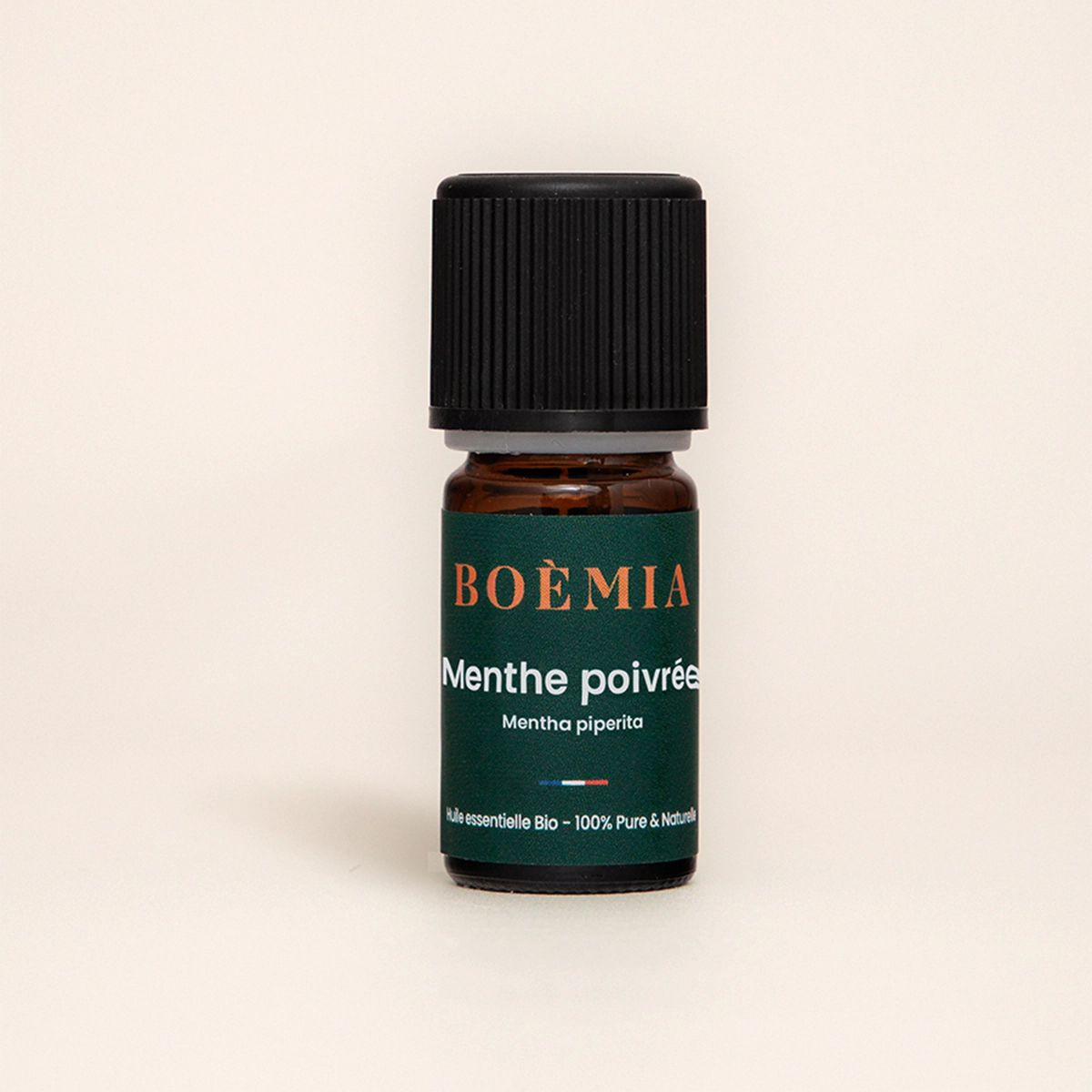
Organic peppermint essential oil from Hungary
8,50€ – 20,00€Price range: 8,50€ through 20,00€FAQ : Answers to your questions
❓ Why is peppermint essential oil not recommended for children, pregnant or breastfeeding women?
Peppermint essential oil is formally contraindicated in children under 6, pregnant women and nursing mothers, due to its high concentration of menthol and menthone, two molecules with neurotoxic potential.
In children, it can cause laryngeal spasms, severe respiratory disorders or epileptic seizures.
In pregnant women, it can cross the placental barrier, causing uterine contractions and representing an abortion risk. During breast-feeding, it can alter the taste of milk and cause adverse reactions in infants.
❓ What are the risks of undiluted cutaneous use of peppermint?
We strongly advise against applying purepeppermint essential oil to the skin. It can cause a burning sensation, skin irritation or an allergic reaction within minutes.
Peppermint contains ketones (menthone) and menthol, which rapidly penetrate the skin and can reach the nervous system, with an increased risk of toxicity.
For any cutaneous application, it must be diluted in a vegetable oil (e.g. sweet almond), at a concentration of 1 to 2% maximum, i.e. 1 drop in 5 ml ofvegetable oil (5ml = one teaspoon). Honey is an interesting base for an oral preparation.
❓What are the possible interactions between peppermint essential oil and medications?
Peppermint may interfere with certain drug treatments, particularly those related to the heart, liver or digestive system.
It is known to inhibit certain liver enzymes (CYP450) involved in the breakdown of drugs. This can increase their concentration in the blood, leading to an increased risk of side effects or unintentional overdose.
It is therefore imperative to consult a health professional before using this essential oil in conjunction with any medical treatment, even current ones.
❓What are the symptoms of an overdose or adverse reaction to peppermint?
Overdosage or misuse ofpeppermint essential oil may cause :
digestive disorders (diarrhea, vomiting),
skin itching, irritation or burns,
respiratory problems, coughing (especially in children or asthmatics when diffused in the air),
convulsions or neurological disorders in sensitive or epileptic people.
In the event of accidental intake, eye contact or abnormal symptoms, contact a Poison Control Center immediately.
Always perform a skin test in the crook of the elbow before first use.
❓Is there a milder alternative to peppermint essential oil?
Yes. For sensitive individuals, children aged 3 and over, or for daily use, we recommendpeppermint hydrosol.
Less concentrated in menthol, it retains its digestive, refreshing and soothing properties, while limiting toxic risks.
As a drink (1 tablespoon diluted in a glass of water) or applied topically, it is a safe and beneficial alternative to essential oil.
❓Is peppermint essential oil harmful to the nervous system?
Peppermintessential oil has a strong effect on the nervous system, making it an excellent ally against migraines, but also a source of contraindications for sensitive individuals. Several studies have shown that some of its molecules, such as menthol, menthone andisomenthone, can cross the blood-brain barrier and interact with neurons. Depending on the case, this can lead to relief (e.g. analgesic effect through activation of cold receptors), but also to disorders such as dizziness, convulsions or a feeling of unease.
In case of doubt, or if you are taking medication, medical advice is strongly recommended. For a gentler action,peppermint hydrosol is a safer alternative, especially for children and sensitive people.
❓Can peppermint essential oil be used like lavender or other common essential oils?
No, peppermint essential oil cannot be used like true lavender or sweet orange, which are much better tolerated. Its high menthol and menthone content makes it more powerful, but also more irritating and neurotoxic in certain doses. It always requires rigorous dilution and specific precautions, especially for children, sensitive people or those undergoing medical treatment. Before using it, it’s essential to be well-informed about its particularities.